India's cotton imports are reshaping the country's textile supply outlook for the 2026-27 season. Carry-forward stocks are projected to rise by approximately 42%, surpassing 85 lakh bales, according to investment advisory firm Kedia Advisory. The surge follows the Indian government's decision to exempt cotton imports from duty, dramatically improving raw material availability across the sector.
Duty-Free Policy Drives a Sharp Import Surge
The removal of import duties on cotton has opened the door to large-scale procurement from international markets. Indian spinning mills and textile manufacturers responded swiftly, accelerating purchases to build up raw material reserves. This policy shift represents one of the most consequential changes to India's cotton trade environment in recent years.
Higher import volumes are directly translating into stronger carry-forward positions. With more cotton flowing into the domestic supply chain, manufacturers can plan production cycles with greater confidence and fewer disruptions.
What 85 Lakh Bales Means for the Industry
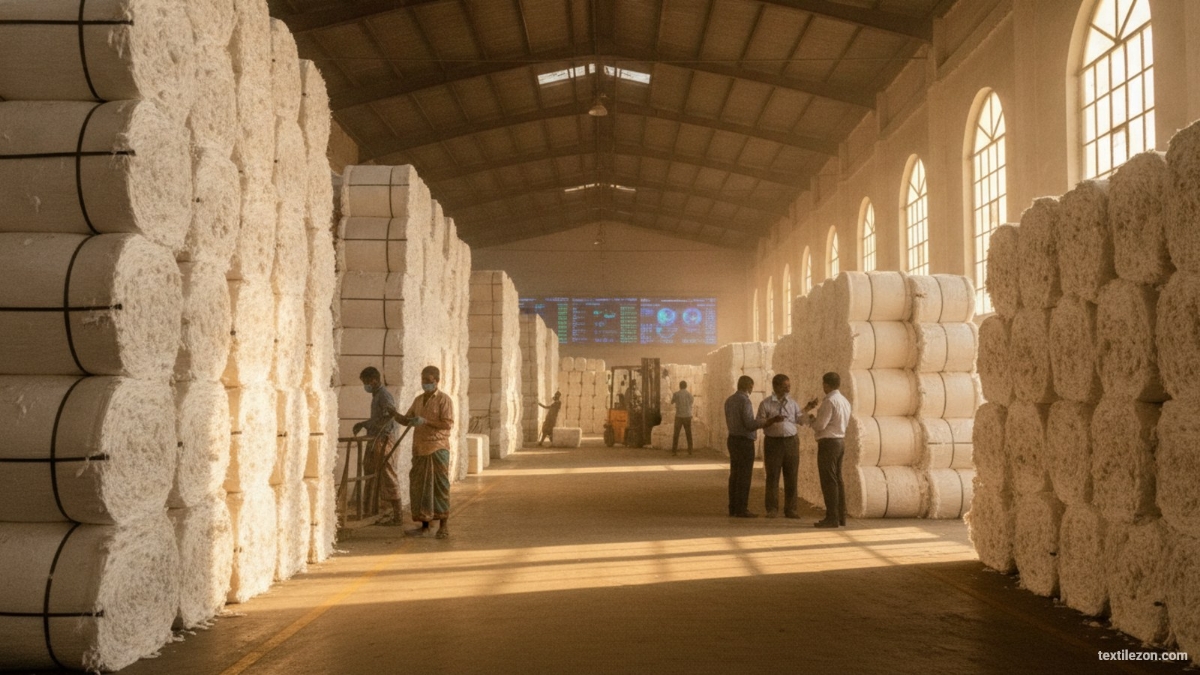
A carry-forward stock exceeding 85 lakh bales creates a substantial buffer for India's textile industry heading into the new season. This level of availability helps stabilize domestic cotton prices and reduces the risk of supply shortages during peak manufacturing periods. For readers following textile news, this stock build marks a structural shift in India's cotton supply dynamics.
Kedia Advisory's projections indicate the 42% increase reflects not just higher import volumes but also a broader recalibration of procurement strategies. Major industry players are moving away from just-in-time buying toward forward stocking models.
Implications for Manufacturers and Exporters
Improved cotton availability lowers input cost volatility for yarn spinners and fabric producers across India. Exporters competing in global B2B markets stand to benefit from more predictable raw material pricing and tighter cost control. This advantage can strengthen margin stability and support competitive pricing in international tenders.
The duty-free window also enables strategic sourcing diversification. Manufacturers can now blend domestic cotton with imports to optimize quality and cost profiles across different product categories.
Frequently Asked Questions
What are cotton carry-forward stocks?
Carry-forward stocks are the cotton inventory remaining at the end of a crop season that rolls over into the next. Higher carry-forward levels indicate a stronger supply cushion and more stable raw material availability for the textile industry.
Why did India exempt cotton imports from customs duty?
The Indian government removed import duties to ease domestic cotton supply tightness and help textile manufacturers source raw materials at competitive global prices. The policy aims to support the cost competitiveness of India's export-oriented textile sector.
How will higher carry-forward stocks affect domestic cotton prices?
Increased import volumes and larger carry-forward stocks typically apply downward pressure on domestic cotton prices. This benefits downstream manufacturers — including yarn spinners, weavers, and garment exporters — by reducing input costs and improving production economics.
India's textile sector enters the 2026-27 season with markedly improved raw material security, underpinned by proactive trade policy and robust import activity. The projected 42% rise in carry-forward stocks positions the industry for more stable production planning, lower price volatility, and stronger competitiveness in global markets.