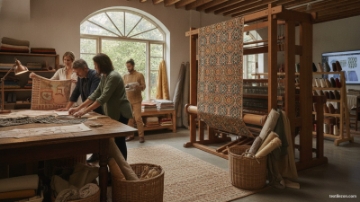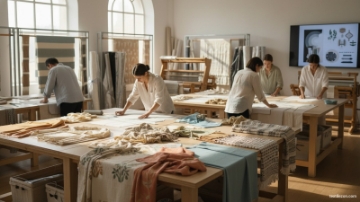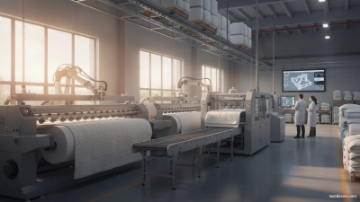
Linen fiber stands apart from other natural materials due to its combination of tensile strength, breathability, and distinctive texture. Custom linen curtains are a preferred specification in both residential interiors and commercial hospitality projects — yet the properties that define their performance begin long before the weaving stage. From the flax fields of Western Europe and East Asia to the finishing mills that prepare fabric for curtain production, every stage of the supply chain shapes how a finished panel looks, drapes, and ages.
For B2B procurement professionals, interior furnishing manufacturers, and fabric suppliers, understanding the fiber-to-drape journey is essential. It informs sourcing decisions, quality benchmarking, and product development for custom curtain lines targeting both mass and premium market segments.
- What Makes Linen Fiber Unique
- From Flax Plant to Processed Fiber
- Weave Structures and Fabric Construction
- Finishing Treatments for Curtain-Grade Linen
- Customization Options in Linen Curtain Production
- Performance Properties That Define the Drape
- Frequently Asked Questions
- Key Takeaways for Linen Curtain Sourcing
What Makes Linen Fiber Unique
Linen is derived from the bast fibers of the Linum usitatissimum (flax) plant. These fibers run along the outer stem, providing structural support — which explains why linen is significantly stronger than cotton at equivalent yarn counts. This strength translates directly into long-term durability in curtain applications, particularly at stress points such as heading pleats and hem seams.
The fiber's natural composition includes cellulose, hemicellulose, and pectin. Pectin binds individual fiber bundles together, contributing to linen's characteristic stiffness before finishing treatments are applied. It also governs the retting process: controlled biological decomposition breaks down pectin to separate usable fibers from the woody stem.
Linen absorbs moisture readily and releases it quickly. This hygroscopic behavior makes linen curtains resistant to humidity-related degradation — a valuable property in rooms with fluctuating moisture levels such as kitchens and sun-exposed living areas.
From Flax Plant to Processed Fiber
The linen supply chain begins at harvest. Flax is typically pulled from the ground rather than cut, preserving the full length of stem fiber. Longer fibers produce finer, more uniform yarns — a critical factor for high-quality curtain fabric production.
Retting: Unlocking the Fiber
Retting separates linen fiber bundles from the flax stem through controlled biological decomposition. The two primary commercial methods are:
- Dew retting: Stalks are spread on grass fields and exposed to dew and rain for several weeks. This method produces fiber with a natural grey-brown tone and is the most environmentally sustainable approach.
- Water retting: Stalks are submerged in tanks or rivers. This method produces lighter, more uniform fiber with superior color consistency for dyeing, but requires managed wastewater handling.
The choice of retting method directly affects final fiber color, uniformity, and hand feel. Premium linen curtain fabrics typically begin with dew-retted or carefully water-retted fiber that delivers consistent quality across production batches.
Scutching and Hackling
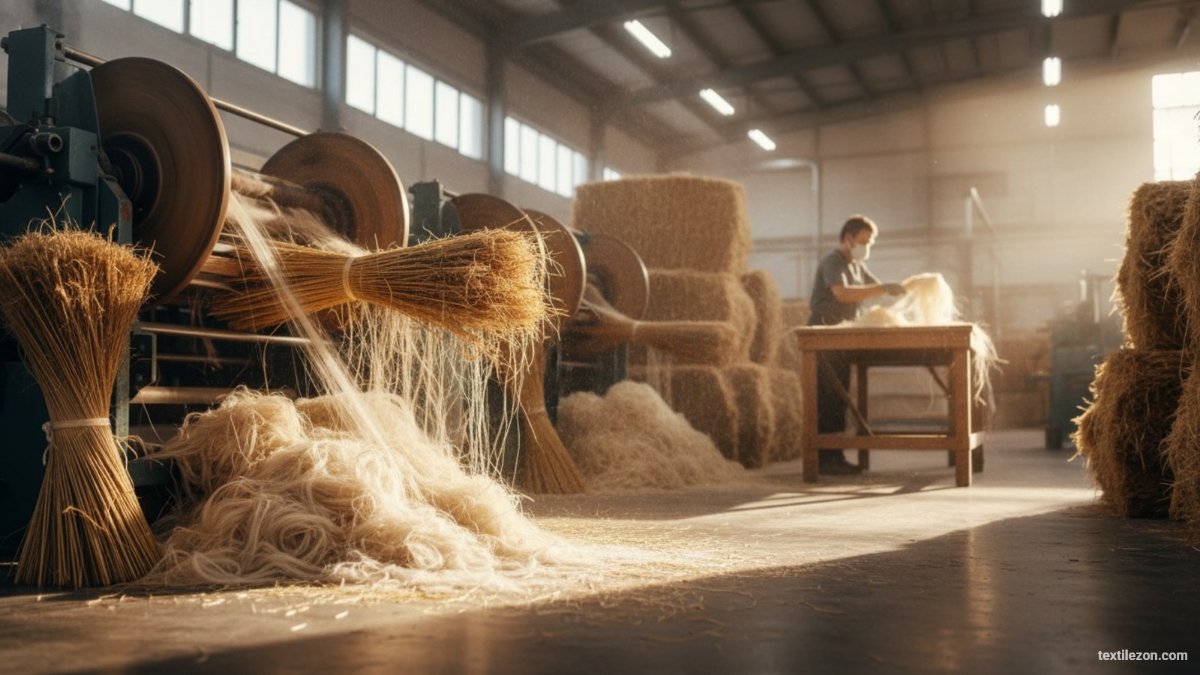
After retting, dried stalks undergo scutching — a mechanical process that breaks the woody core (shive) away from the fiber. The fiber mass is then passed through hackling combs, which align fibers in parallel and separate long line fibers from shorter tow fibers.
Line fibers are longer, smoother, and more uniform; they are used for fine linen yarns and smooth-surface curtain fabrics. Tow fibers are shorter and coarser, producing textured, slubbed fabrics that many interior designers specify for casual and natural interior aesthetics.
Spinning Linen Yarn
Wet spinning is the standard method for fine linen yarn production. Fiber passes through a hot water bath before twisting, which softens the natural pectin and enables finer, more even yarn formation. The result is a smooth, strong yarn well-suited to tight-weave curtain fabrics.
Dry spinning produces coarser yarns with visible surface irregularities — popular in textured linen fabrics where an artisan or natural look is the design goal. Yarn count, expressed in the lea system or converted to Nm or Ne, determines fabric fineness: higher counts yield more elegant fabrics with softer drape, while lower counts produce heavier constructions for room-darkening applications.
Weave Structures and Fabric Construction
The weave structure determines how a curtain fabric drapes, filters light, and withstands repeated use. Linen curtain fabrics are produced in several standard constructions:
- Plain weave: The most common structure, producing a balanced, stable fabric with a clean surface suitable for both sheer and opaque curtain weights.
- Twill weave: Creates a diagonal surface pattern and adds softness to the hand. Used for heavier, structured panels in formal interior settings.
- Leno weave: An open, gauze-like structure for sheer linen curtains. Provides good light diffusion while maintaining fabric integrity and dimensional stability.
Fabric weight, measured in grams per square meter (GSM), is the primary specification distinguishing curtain fabric grades. Sheer linen curtains use fabrics in the 80–130 GSM range. Mid-weight panels fall between 180–250 GSM. Blackout-lined linen constructions can exceed 300 GSM when the face fabric is measured with interlining included.
Finishing Treatments for Curtain-Grade Linen
Raw linen fabric undergoes several finishing steps before it is suitable for curtain production. These treatments address linen's natural stiffness and shrinkage tendency — both of which must be controlled for predictable cut-and-sew performance at scale.
Desizing and Scouring
Desizing removes sizing agents applied during weaving. Scouring cleans residual plant matter, waxes, and impurities from the fabric surface. Both steps prepare linen for dyeing and finishing, ensuring consistent color uptake across production lots.
Pre-Shrinking and Sanforization
Linen can shrink 3–5% in both warp and weft directions when exposed to moisture and heat. For custom curtain production, pre-shrinking or sanforization is essential. This treatment mechanically compresses the fabric before cutting, minimizing post-installation shrinkage and ensuring finished panels maintain their specified dimensions.
Softening and Surface Treatments
Chemical softeners reduce linen's natural stiffness and improve drape. Enzyme treatments create a worn, pre-washed surface without compromising fiber strength. Stone washing applied at the finished curtain stage produces a relaxed, lived-in texture widely valued in contemporary residential and hospitality interior specifications.
Customization Options in Linen Curtain Production
The technical flexibility of linen fiber supports a wide range of product customization options that B2B buyers and curtain manufacturers can use to differentiate their lines across market segments.
- Fiber blends: Linen-cotton blends (commonly 55/45) balance durability with softness. Linen-polyester blends offer dimensional stability for contract applications. Linen-viscose blends improve fluidity and drape.
- Color options: Natural, undyed greige linen remains popular for minimalist and organic interior schemes. Reactive-dyed colorways offer a broad palette with good wash-fastness ratings.
- Weave and texture customization: Dobby patterns and jacquard designs are available for premium contract or hospitality specifications requiring decorative surface interest.
- Width specifications: Standard curtain fabric widths are 140 cm and 280 cm. Custom widths are available for large-format panel constructions in commercial installations.
For large-volume B2B orders, direct engagement with linen mills in France, Belgium, Lithuania, and China allows buyers to specify fiber origin, yarn count, weave structure, and finishing parameters within a single supply chain. Explore more textile technical content at textilezon.com articles to support your sourcing and product development decisions.
Performance Properties That Define the Drape
The performance of a custom linen curtain in an installed interior reflects every decision made along the fiber supply chain. Several key properties define how linen curtains behave in real-world use.
Drape and Hand
Linen's drape is characteristically structured rather than fluid. Unlike silk or viscose, linen hangs with weight and body, creating clean, architectural folds that suit both formal and casual settings. As linen fabric is washed and used over time, it softens progressively — a property known as break-in softening — improving drape without compromising structural integrity.
Light Filtration
The natural slubs and slight irregularities in linen weave create a soft, diffused light quality when used as unlined sheers. Even relatively dense linen fabrics allow warm, filtered light to pass through. This characteristic light response is a primary reason linen remains the preferred fiber for light-sensitive interior specifications.
Thermal and Acoustic Performance
Linen's cellulose fiber structure provides moderate insulation. When combined with interlining in lined curtain constructions, linen panels contribute meaningfully to a room's thermal efficiency. The dense fiber structure also provides mild acoustic damping — a useful property in hospitality and office environments where curtains serve both decorative and functional roles.
Durability and Longevity
Linen is among the most durable natural fibers available for textile end-use applications. Its tensile strength allows curtain panels to resist tearing at heading pleats and hem seams under frequent operation. Linen also resists pilling and surface abrasion better than cotton or blended fabrics of equivalent weight, supporting a significantly longer service life.
Frequently Asked Questions
What is the difference between line fiber and tow fiber in linen production?
Line fibers are the long, smooth fibers extracted from the flax stalk during hackling. They produce fine, even yarns used in smooth-surface curtain fabrics. Tow fibers are shorter and coarser, creating textured, slubbed fabrics preferred for casual or rustic interior aesthetics.
Why does linen shrink, and how is it controlled for curtain production?
Linen shrinks because its cellulose fibers contract when exposed to moisture and heat. Pre-shrinking and sanforization treatments reduce residual shrinkage to below 2%, ensuring custom-cut curtain panels maintain their specified dimensions after installation and laundering.
What GSM range is appropriate for different curtain applications?
Sheer and light-filtering linen curtains use fabrics in the 80–130 GSM range. Room-darkening panels use 180–250 GSM fabrics. Lined and interlined constructions for thermal or acoustic applications combine face fabrics of 200–280 GSM with additional interlining layers.
How does wet spinning affect linen yarn quality for curtain fabrics?
Wet spinning passes linen fiber through a hot water bath during twisting, softening the natural pectin binders. This enables finer, more uniform yarn formation, producing smoother fabrics with better color consistency and a softer hand — critical quality factors for premium curtain fabric production.
What are the most common linen fiber blends used in curtain fabric production?
Linen-cotton blends (typically 55% linen / 45% cotton) are the most widely used combination, balancing linen's durability with cotton's softness and care ease. Linen-polyester blends are favored for contract applications requiring dimensional stability. Linen-viscose blends add fluidity and improved drape at the cost of some fiber durability.
Key Takeaways for Linen Curtain Sourcing
The quality of a custom linen curtain is determined at every stage of the supply chain — from retting and scutching through spinning, weaving, and finishing. Procurement professionals who understand these technical stages can specify materials more precisely and evaluate supplier quality claims with greater confidence.
- Fiber extraction method (dew vs. water retting) directly affects final fabric color and uniformity.
- Line fibers produce premium curtain fabrics; tow fibers suit textured, casual-aesthetic products.
- Pre-shrinking and sanforization are essential quality steps for dimensionally stable custom curtain production.
- Wet spinning produces finer yarns and superior fabric quality compared to dry spinning for curtain applications.
- GSM, weave structure, and finishing treatment together define a curtain fabric's drape, light filtration, and performance profile.
Textile professionals sourcing or manufacturing custom linen curtains gain a decisive competitive advantage by engaging directly with mills that provide full traceability from fiber origin through finished fabric. This transparency supports both quality assurance processes and sustainability documentation — increasingly non-negotiable requirements in global B2B textile procurement.