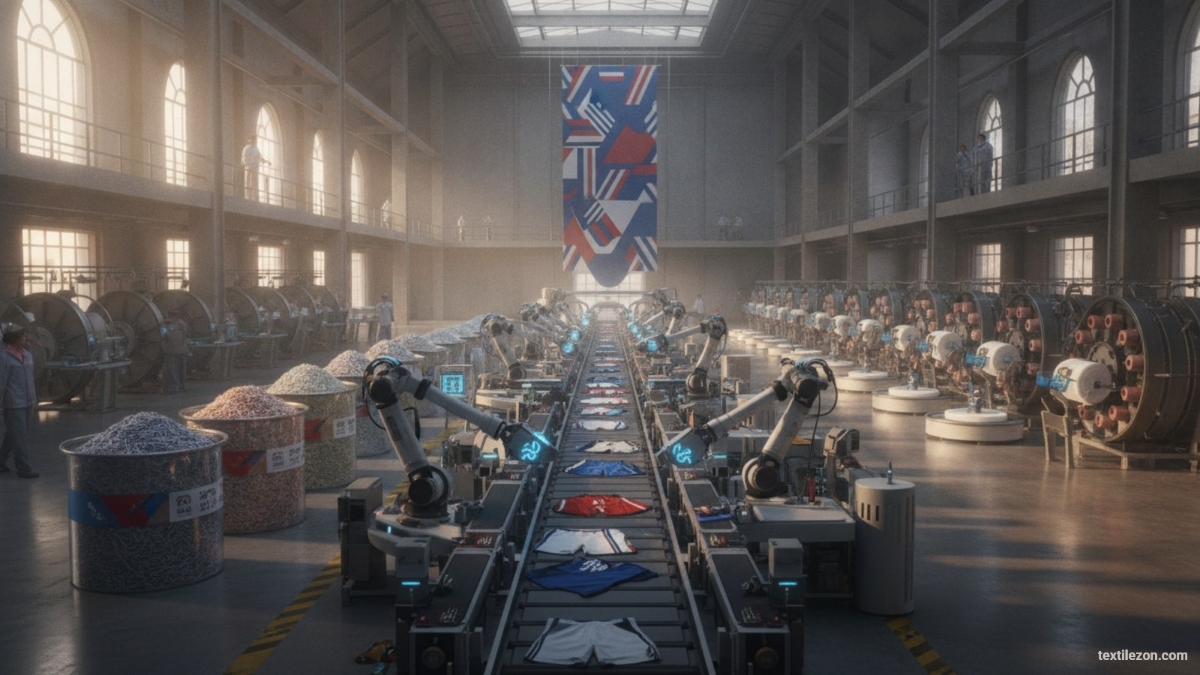
The 2026 FIFA World Cup is emerging as a transformative moment for the textile recycling market. Roughly three-quarters of national team kits for the tournament will use materials derived wholly or partly from recycled polyester. This level of adoption marks a decisive shift in how leading sportswear brands approach circular fibres at scale.
World Cup as a Catalyst for Circular Fibres
Large-scale sporting events have influenced apparel trends before, but FIFA 2026 carries distinct commercial weight. For recyclers and material innovators, it delivers what policy targets and pilot projects have consistently failed to provide: a predictable, high-volume demand signal from the world's biggest sportswear companies.
Textile recycling has grown slowly in part because scale economics depend on reliable offtake. Without long-term purchase commitments, recyclers cannot justify the capital investment needed to build industrial-grade processing capacity. The World Cup's scale of orders could change that calculus significantly, unlocking investment and stabilising demand across the sector.
Brand Commitments Driving Recycled Polyester Adoption
Nike has set the most ambitious benchmark for the tournament. Its Aero-Fit fabric — used by 12 national teams, including Brazil, England, and France — is manufactured entirely from recycled textile waste. This is one of the clearest public statements yet that recycled fibres can meet the technical demands of elite sport.
Puma's Re. programme takes a similar approach. The company reports that at least 95% of the polyester in kits for 11 national teams — including Portugal, Morocco, and Ghana — originates from old clothing, unsold stock, manufacturing offcuts, and textile scraps.
Adidas supplies kits for 14 teams, including Argentina, Spain, and Mexico. The brand has incorporated polyester from textile waste into its Climacool fabric and has committed to raising its share of recycled textile raw materials to 10% by 2030, though it has not disclosed a specific percentage for its FIFA 2026 products.
From Performance Sportswear to Industrial-Scale Recycling
Sportswear is one of the most demanding categories for material substitution. Fabrics must deliver light weight, breathability, moisture control, and durability under repeated high-stress use. The successful use of textile-waste-derived polyester in World Cup kits is therefore a significant milestone for the broader recycled polyester industry.
If these supply chains — covering collection, sorting, processing, and polymerisation — prove commercially sustainable beyond the tournament, the impact could extend far beyond the kits themselves. Industry experts compare this potential to what electric vehicle demand did for battery manufacturing: moving a technology from fragmented trials to full industrial deployment. Explore more developments in apparel sustainability via the Info Center on textilezon.com.
Frequently Asked Questions
What percentage of FIFA 2026 national team kits use recycled materials?
Approximately 75% of national team kits for the 2026 FIFA World Cup are made wholly or partly from recycled polyester derived from textile waste, representing a significant acceleration in circular fibre adoption across the leading sportswear brands.
Which sportswear brands are leading recycled polyester commitments for FIFA 2026?
Nike (12 teams, 100% recycled textile-waste fabric via Aero-Fit), Puma (11 teams, at least 95% recycled polyester via Re. programme), and Adidas (14 teams, recycled textile polyester in Climacool, targeting 10% recycled raw materials by 2030) are the three primary brands driving adoption.
How could FIFA 2026 reshape the long-term textile recycling market?
If the supply chains established for the tournament prove commercially viable, FIFA 2026 could trigger lasting investment in textile recycling infrastructure, stabilise demand for recycled polyester, and improve the economics of circular materials across the global apparel industry well beyond 2026.
The 2026 FIFA World Cup represents a real-world stress test for circular fibres at unprecedented scale. Whether the systems built to supply these kits endure after the final whistle will determine whether this tournament becomes a genuine turning point for the textile recycling market.