Heat stress is threatening Cambodia's garment, footwear, and travel goods (GFT) industry with significant productivity losses and export revenue decline. A major new report calls for urgent, coordinated action before the situation deteriorates further. The findings carry direct consequences for the 1.2 million workers employed across the sector. Stay current with the latest developments in our Info Center.
The report, “Mitigating Heat Stress in the Garment, Footwear and Travel Goods Sector,” was produced by GIZ in collaboration with Cornell University's Global Labor Institute, the ILO, and IFC's Better Work programme. It drew on expert consultations held in Phnom Penh in January 2026. The report delivers practical recommendations for managing occupational heat risk across Cambodia's apparel manufacturing sector.
Extreme Heat Conditions Inside Cambodian Factories
Phnom Penh has recorded one of the steepest increases in extreme heat days among major global apparel manufacturing hubs. Annual days with temperatures exceeding 35°C rose from an average of 35 days between 2005 and 2009 to 112 days during 2020–2024. This sharp rise directly affects factory working conditions.
The report found that 82% of manufacturing facilities recorded indoor temperatures above 32°C in their hottest production areas. One in three factories experienced days when indoor temperatures exceeded 35°C. In 53% of facilities, indoor temperatures surpassed concurrent outdoor temperatures.
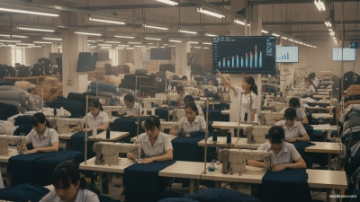
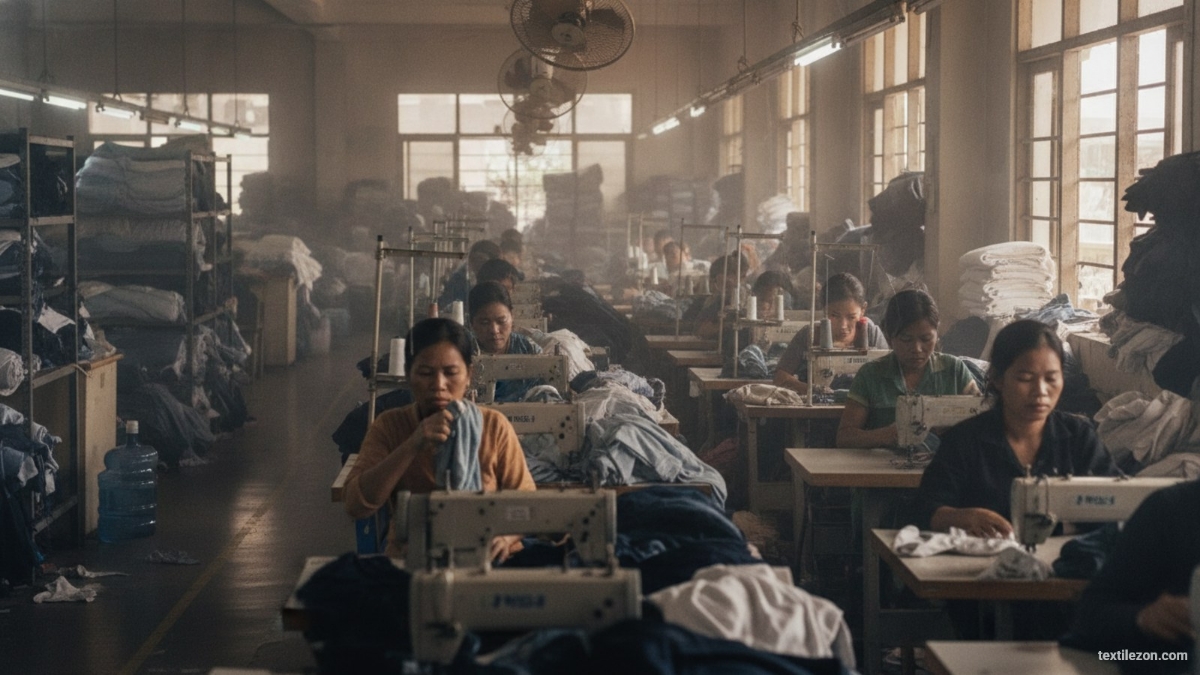
Production conditions compound the heat challenge. Factories combine heat-generating machinery, crowded workspaces, inadequate ventilation, and protective clothing that traps body heat. These factors drive dehydration, fatigue, heat exhaustion, and an elevated risk of workplace accidents.
Women account for approximately 78% of Cambodia's GFT workforce. Pregnant workers and those performing physically intensive tasks face the highest risks from prolonged heat exposure, reinforcing the need for targeted workplace protection policies.
Economic Impact on Cambodia's Export Base
Cambodia's GFT industry generated US$15.7 billion in export earnings in 2025, making it one of the country's most strategically important economic sectors. Heat stress now threatens this foundation from multiple directions.
Prolonged high temperatures reduce output through “presenteeism” — workers remain on the job but cannot maintain normal productivity levels. Heat-related illness also drives absenteeism and increases the likelihood of costly errors and accidents on the production floor.
Without effective adaptation, Cambodia's apparel sector risks losing 18% of its potential export earnings by 2030. The sector could also create approximately 50,000 fewer new jobs than projected. For a country dependent on GFT exports, these losses carry broad and lasting economic consequences.
What Government and Industry Must Do
The report calls for a coordinated response from governments, manufacturers, international buyers, and worker representatives. It identifies several priority actions:
- Strengthen occupational safety regulations specific to heat risk
- Revise Cambodia's 2002 Prakas 147 ministerial regulation to include heat-specific safety standards
- Require formal heat-risk assessments at factory level
- Establish written heat management plans covering ventilation, rest breaks, and water access
- Deploy heat monitoring systems across production floors
- Encourage international buyers to align sourcing practices with heat-safe manufacturing standards
The report is explicit: no single actor can resolve this challenge alone. Regulation, isolated factory pilots, and individual brand initiatives are insufficient without sector-wide coordination. Measurement, prevention, worker participation, and practical factory support must all advance together.
Cambodia's garment sector has a clear strategic opportunity to act early. Heat-safe production is not only a worker protection priority — it is a core element of Cambodia's long-term industrial competitiveness in a warming global economy.
Frequently Asked Questions
How severe has the heat stress situation become in Cambodian garment factories?
Extreme heat days in Phnom Penh climbed from 35 per year (2005–2009) to 112 per year (2020–2024). Over 82% of factories recorded indoor temperatures above 32°C, and one in three experienced days when indoor temperatures exceeded 35°C.
What are the projected economic losses if no action is taken?
The report estimates Cambodia's GFT sector could lose 18% of its potential export earnings by 2030 and generate around 50,000 fewer new jobs than expected. This directly threatens the sector's US$15.7 billion annual export contribution.
Which organizations produced the heat stress report?
GIZ led the study in collaboration with Cornell University's Global Labor Institute, the ILO, IFC's Better Work programme, and additional technical specialists. Industry consultations were held in Phnom Penh in January 2026.