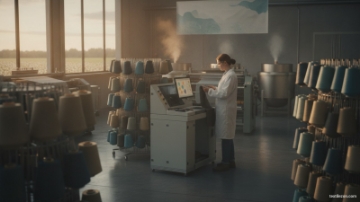
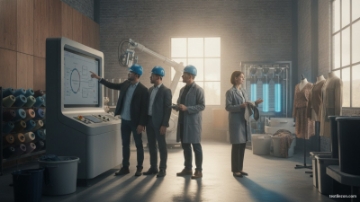
Nylon recycling is moving from the lab to industrial scale. Epoch Biodesign has announced plans to build Europe's first—and the world's largest—enzymatic nylon 6,6 biorecycling demonstration plant at Imperial College London's Grapht Works manufacturing centre in North Acton. Targeted for Q3 2026, the facility marks a pivotal step toward material circularity in the global textile industry. Follow the latest developments in textile news on Textilezon.
Europe's First Enzymatic Nylon 6,6 Recycling Facility
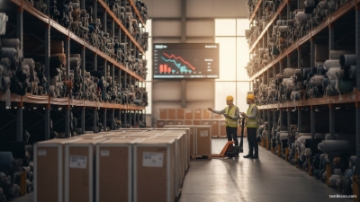
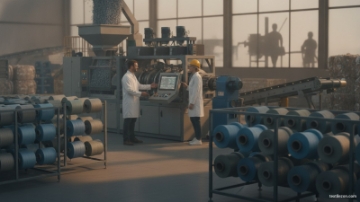
The Grapht Works site will be the first enzymatic nylon recycling facility in Europe and the largest globally by processing capacity. Epoch Biodesign designed it as a scale-up step to translate its patented biological process from the laboratory into industrial operation. The plant will handle several hundred tonnes of post-consumer nylon 6,6 per year, sourced from apparel, automotive, and industrial applications.
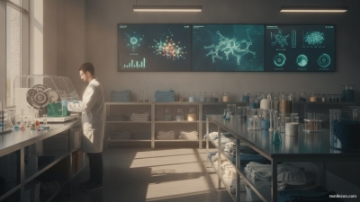
Epoch's system uses AI-engineered enzymes to break down complex nylon-containing waste streams into their original chemical monomers. Input materials include:
- Silicon-coated airbag fabrics
- Elastane-blended textiles
- End-of-life clothing and apparel
- Industrial nylon from automotive applications
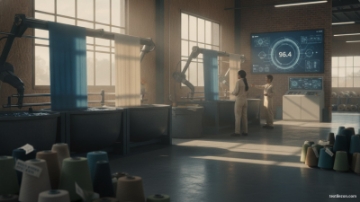
The recovered monomers are described as virgin-quality and feed directly back into nylon 6,6 manufacturing supply chains. Unlike conventional chemical recycling, this biological process operates at lower temperatures and demands less heavy infrastructure. This enables the facility to sit within an urban London neighbourhood—a point Epoch's founders call a feature of the process, not incidental to it.
Founder and CEO Jacob Nathan called the London location a deliberate statement. A nylon 6,6 recycling plant operating in Greater London is, he argued, a direct result of the clean, low-energy process his team developed.
EU Regulations and the Textile Recycling Gap
Epoch's Q3 2026 launch aligns with tightening EU policy. The Ecodesign for Sustainable Products Regulation introduces new requirements from July 2026, including a ban on destroying unsold garments. Apparel and automotive brands now face mounting compliance obligations over end-of-life nylon management.
The scale of the recycling shortfall is stark. Less than 1% of textiles currently become new textiles, underscoring how far global recycling infrastructure must scale to close the gap. Chief Commercial Officer Luciano Caruso stated that incineration and landfill are no longer acceptable disposal routes for post-consumer nylon.
Caruso added that the Grapht Works plant validates Epoch's process both technically and commercially, offering industry partners and policymakers a proven, circular route to nylon recycling that is clean, economically viable, and operational today. He also positioned the facility as the start of a sustainable supply chain for nylon, free from the pricing volatility of petrochemical-derived products.
Investment, Partnerships, and Expansion Outlook
In February 2026, Epoch Biodesign signed a Memorandum of Understanding with INVISTA, one of the world's largest nylon producers, targeting commercial-scale production of post-consumer recycled nylon 6,6. The company is also a member of the T2T Alliance, advancing textile-to-textile recycling at scale.
Epoch has raised more than $50 million from a strategic investor base that includes lululemon, Lowercarbon Capital, Extantia, KOMPAS VC, Happiness Capital, Leitmotif, and Inditex (Mundi Ventures). This backing signals strong commercial confidence in enzyme-driven nylon recycling.
The Q3 2026 London launch positions the Grapht Works plant as a proof-of-concept for broader geographic deployment. A successful demonstration could support additional regional facilities and higher processing volumes, building a resilient and circular supply chain for a critical synthetic material.
Frequently Asked Questions
What is nylon 6,6 biorecycling?
Nylon 6,6 biorecycling uses AI-engineered enzymes to break post-consumer nylon waste into its original chemical monomers. These virgin-quality monomers re-enter nylon 6,6 manufacturing supply chains, creating a closed material loop without new petrochemical inputs.
When will Epoch Biodesign's London plant open?
Epoch Biodesign targets a Q3 2026 opening for its Grapht Works facility in North Acton, London. The plant will be Europe's first enzymatic nylon 6,6 recycling facility and the largest globally by processing capacity.
What types of waste does the facility accept?
The plant accepts multiple post-consumer nylon 6,6 waste streams: end-of-life clothing, silicon-coated airbag fabrics, elastane-blended textiles, and industrial nylon from automotive applications.
The London biorecycling plant represents a defining moment for enzymatic nylon recycling. As EU regulatory requirements take effect and global investment accelerates, Epoch Biodesign's North Acton facility establishes a replicable, industrial-scale model for circular nylon production.