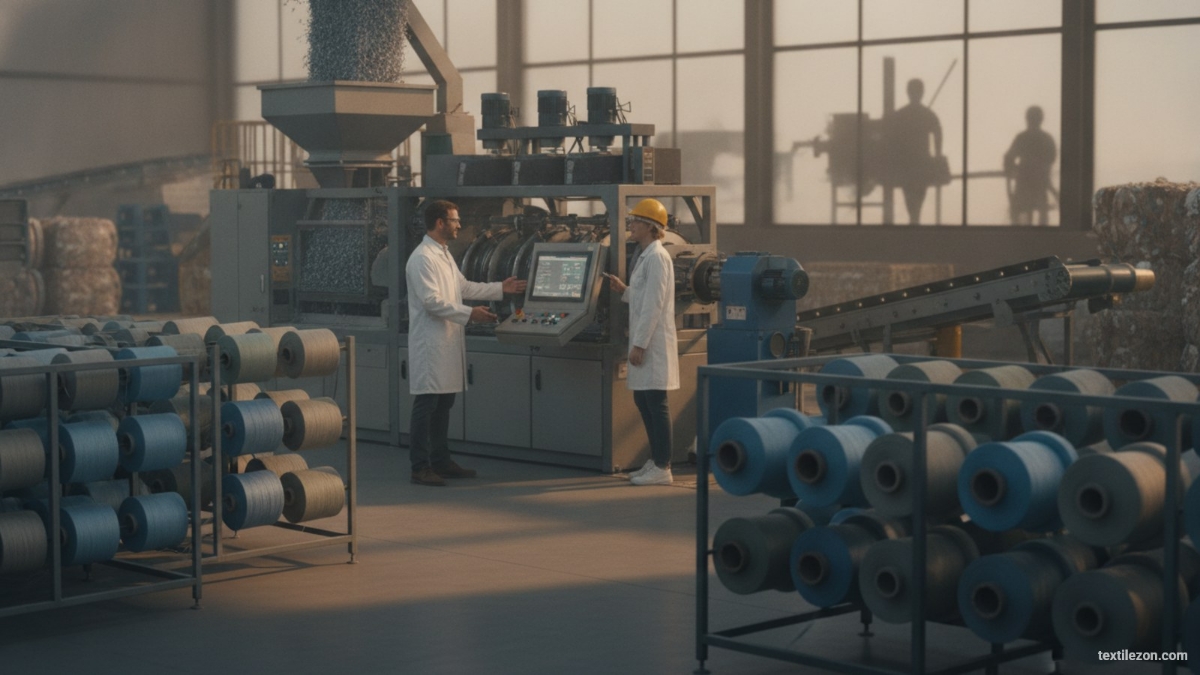
French start-up Syntetica has secured a $30 million Series A funding round to industrialize its proprietary nylon recycling technology. Lululemon and manufacturer MAS Holdings joined the round, reflecting cross-sector demand for scalable synthetic fiber recycling solutions. The proceeds will fund Syntetica's first commercial demonstration facility, marking a pivotal advance for the circular textile industry.
A Breakthrough in Nylon Recycling Technology
Syntetica's core innovation is a patented nylon recycling process that simultaneously recovers both Nylon 6 and Nylon 6,6 from mixed textile waste streams. Conventional methods require costly pre-sorting of these two nylon variants before any treatment can begin. By eliminating that prerequisite, Syntetica dramatically expands the volume of post-consumer textiles that can be diverted from landfills. The technology targets a long-standing gap where technical complexity has blocked industrial recycling at scale.
Marco Bertone, co-founder and CEO of Syntetica, described the industry challenge his team is solving.
"For decades, mixed nylon waste has been considered too complex and too expensive to recycle at scale. We have shown that it is possible to recover high-value materials from the waste streams the industry has historically written off. This funding allows us to move from breakthrough chemistry to industrial reality and accelerate the transition to more circular materials."
The $30 Million Investment Round
Bpifrance's Ecotechnologies 2 fund led the Series A. Participating investors included Swen Capital Partners, EQT Ventures, and family offices connected to Peugeot, Etam, and the primary shareholder of Indorama Ventures. The combination of public investment funds, venture capital, and industry family offices signals broad confidence in Syntetica's commercial trajectory. Lululemon's direct participation adds a brand-side demand signal that strengthens the investment case.
The market context makes the funding especially timely. Global nylon production currently reaches approximately 7 million tons annually, yet recycled nylon accounts for just 2% of the market. Technical complexity in processing mixed-fiber garments has kept that share stubbornly low, creating a clear commercial opportunity for advanced nylon recycling solutions.
Industrial Facility and Commercial Roadmap
Syntetica will establish its first demonstration facility at Michelin's Centre for Sustainable Materials in Clermont-Ferrand, France. The site will initially process several hundred tons of textile waste per year, scaling progressively toward full industrial output. Co-founders Bertone and Louis Monsigny have already secured early commercial relationships with brands including Victoria's Secret and Etam.
Lululemon's backing signals a wider strategic shift among major apparel brands toward investing in upstream sustainable apparel materials infrastructure. Stay current with circular innovation across the sector through the textilezon.com Info Center. Syntetica's initial production volumes are expected to re-enter branded supply chains as certified recycled nylon, closing the loop on synthetic fiber waste.
Frequently Asked Questions
What makes Syntetica's nylon recycling technology different from existing methods?
Syntetica's patented process recovers Nylon 6 and Nylon 6,6 simultaneously from mixed waste without pre-sorting. This removes a key cost and labor barrier that has blocked industrial-scale recycling of blended nylon textiles for decades.
Who are the main investors in Syntetica's $30 million Series A?
The round was led by Bpifrance's Ecotechnologies 2 fund. Lululemon, MAS Holdings, Swen Capital Partners, EQT Ventures, and family offices linked to Peugeot, Etam, and Indorama Ventures' primary shareholder all participated.
Where will Syntetica's commercial demonstration facility be located?
The facility will be built within Michelin's Centre for Sustainable Materials in Clermont-Ferrand, France. Initial capacity targets several hundred tons of textile waste per year, with plans to scale toward full commercial production.