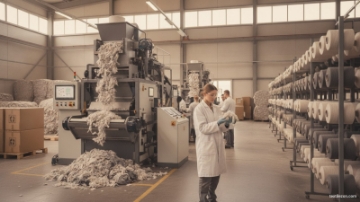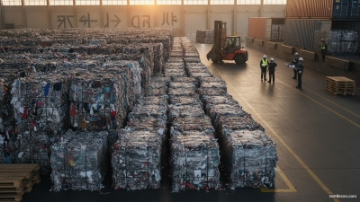
Protein fibers produced through synthetic biology now offer a rapid, repeatable recycling solution for the textile industry. A Washington University in St. Louis research team has engineered a biodegradable protein-based fiber that dissolves in seconds and regenerates without performance loss. With less than 12% of global fiber materials currently recovered, this breakthrough targets one of the industry’s most persistent waste challenges.
Research Breakthrough in Sustainable Fiber Design
Professor Fuzhong Zhang, the Francis F. Ahmann Professor in Energy, Environmental & Chemical Engineering at Washington University in St. Louis, led the research. Zhang also co-directs the Synthetic Biology Manufacturing of Advanced Materials Research Center (SMARC). Their findings appear in the journal Advanced Materials in 2026.
The team used genetically modified microbes in bioreactors to produce a protein hybrid material that is fully biodegradable. This material introduces a closed-loop recycling mechanism that preserves fiber properties across multiple dissolution and regeneration cycles. The work received funding from the U.S. Department of Agriculture and the National Science Foundation.
How the SAM Fiber Platform Works
The research team designed a Silk-Amyloid-Mussel (SAM) hybrid combining three natural protein sources. Mussel foot proteins govern dissolution in formic acid, spider silk contributes tensile strength, and amyloid sequences add structural stability. This design enables independent tuning of mechanical performance and recyclability.
SAM protein fibers dissolve completely in a benign formic acid solution within seconds. The solvent then evaporates quickly, leaving a purified protein matrix ready for re-spinning into new fibers. This avoids the energy-intensive bond-breaking steps that increase cost and emissions in conventional polymer recycling.
- Full dissolution in formic acid within seconds — no chemical bond breakage
- Rapid solvent evaporation recovers a clean protein matrix
- Multiple re-spinning cycles preserve tensile strength and uniformity
- Fibers resist shrinking in water through repeated wash-and-reuse cycles
Performance, Versatility, and Industry Impact
Laboratory tests confirmed that multiple rounds of dissolution and re-spinning preserve high tensile strength and uniformity in SAM fibers. The purified proteins can also be reconfigured as adhesive hydrogels for biomedical and industrial uses, then recycled back into high-strength fibers. This versatility reinforces the circularity of the SAM material platform.
Synthetic fabrics currently release microplastic fibers during laundering that pass through wastewater treatment into aquatic ecosystems. Widespread adoption of protein fibers could significantly reduce this persistent pollution and lower fresh feedstock demand over time. Textile manufacturers and suppliers can follow the latest sustainable material developments in textile news on Textilezon.
Frequently Asked Questions
What are SAM protein-based textile fibers?
SAM (Silk-Amyloid-Mussel) protein fibers are biodegradable materials produced in bioreactors using genetically modified microbes. They combine mussel, spider silk, and amyloid protein sequences to achieve high tensile strength and rapid closed-loop recyclability in a single platform.
How quickly do protein fibers dissolve during recycling?
The protein fibers dissolve completely in a benign formic acid solution within seconds. The solvent then evaporates rapidly, leaving a purified protein matrix ready for regeneration into new fibers that retain equivalent mechanical performance.
When and where was this protein fiber research published?
The study appeared in Advanced Materials in 2026 (e73200), titled “Biosynthesized Silk-Amyloid-Mussel Proteins as Dissolution Recyclable Materials With Tunable Supercontraction.” The authors are Li J, Jeon J, Lee KZ, and Zhang F.
The SAM protein fiber platform demonstrates that synthetic biology can deliver both high mechanical performance and true closed-loop recyclability in a single material system. With global textile fiber recovery rates below 12%, this research offers manufacturers and procurement professionals a science-backed pathway to reduce waste and curb microplastic pollution. Industry adoption of biodegradable fiber technologies will define the next phase of sustainable textile manufacturing.