Circular textile innovation takes a major step forward as HKRITA, Jeanologia, and Looptworks formalize a strategic partnership to build a scalable blended fabric recycling ecosystem. Together, they aim to move proven circular textile solutions from laboratory settings to commercial industrial production. This initiative tackles a challenge no single organization could solve alone: efficiently separating and recycling cotton-polyester blends at scale.
The Green Machine: A Breakthrough in Blended Fiber Separation
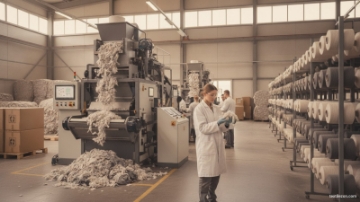
The centerpiece of this collaboration is the Jeanologia Green Machine, a recycling technology originally developed by the Hong Kong Research Institute of Textiles and Apparel (HKRITA). Cotton-polyester blends dominate global apparel production, yet their mixed composition makes them notoriously difficult to recycle. The Green Machine uses an ozone-based decoloring process to prepare blended textiles for clean, efficient fiber separation.
Jeanologia, with over three decades of experience industrializing textile finishing solutions, led the technology transfer and manufactured the first industrial-scale unit. This shifts the Green Machine from a research prototype to a commercially deployable asset. The ozone-based approach also complements Jeanologia's established leadership in water-efficient processing.
Industrial Validation Begins at Looptworks in Oregon
The first industrial-scale Green Machine unit is now in operation at Looptworks' facility in Oregon, USA. As the inaugural commercial user, Looptworks is responsible for validating the technology under real production conditions — a decisive step before broader market deployment. This real-world testing confirms performance across varied operating scenarios, including self-contained mills and dedicated recycling centers.
Successful validation in Oregon will establish a replicable model for integrating circular textile recycling into diverse manufacturing environments. For B2B textile stakeholders, this deployment represents growing industrial capacity in sustainable fiber recovery. Follow developments like this in the Textilezon Info Center.
Expansion Roadmap: Italy and Turkey Are Next
Building on the Oregon launch, the partners have confirmed two additional Green Machine installations — one in Italy and one in Turkey, both strategic hubs for textile manufacturing and finishing. Carmen Silla, marketing director at Jeanologia, stated that the priority is developing a scalable circular textile ecosystem, with public volume targets to follow once industrial performance is proven.
The partnership operates on a pre-competitive model, where research institutions and technology firms share knowledge openly to accelerate sustainable solutions. This collaborative framework lowers barriers for global adoption of blended textile recycling. Jeanologia's involvement also signals a strategic expansion of its mission — from water conservation to full material circularity within the textile value chain.
Frequently Asked Questions
What is the Jeanologia Green Machine?
The Jeanologia Green Machine is an industrial recycling system developed by HKRITA. It uses an ozone-based decoloring process to separate cotton-polyester blends for efficient material recovery and reuse at commercial scale.
Where is the first Green Machine unit currently deployed?
The first industrial unit is operational at Looptworks' facility in Oregon, USA. Looptworks is validating the system under live production conditions as the technology's first commercial-scale user.
Which locations are next in the global expansion plan?
Jeanologia and its partners plan to install Green Machine units in Italy and Turkey, extending the circular textile ecosystem to key European and Eurasian manufacturing markets.
The HKRITA–Jeanologia–Looptworks partnership marks a pivotal moment for the circular textile industry. As industrial validation advances in Oregon and global deployments take shape, blended textile recycling is moving decisively from research ambition to commercial reality.