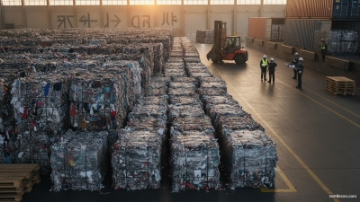
The textile recycling and reuse sector faces its most complex regulatory challenge in decades. At the BIR Textiles Division side session on 2 June in Gothenburg, operators from across the global value chain issued a clear warning: incoming rules are being drafted without sufficient engagement from the industry that actually runs circular textile systems. Division president Martin Böschen called the moment "critical," citing "fundamental shifts driven by policy, market developments and the growing urgency to deliver real circularity."
Multiple Regulations Converging at Once
Several major policy changes are arriving simultaneously, leaving businesses little room to adapt. The UN Basel Convention is advancing new proposals that could reclassify used textile shipments and introduce fresh cross-border trade friction. Meanwhile, the EU Waste Shipments Directive is scheduled to apply from May 2027, even as key operational details remain unresolved.
Extended producer responsibility (EPR) schemes are multiplying across Europe and beyond, pushing new accountability structures into a supply chain already under economic pressure. Jessica Franken of US-based SMART warned that Basel discussions are being shaped by a "negative media narrative" about used clothing — a dynamic she fears could undermine a cross-border reuse system that has functioned for over a century. Stay updated on developments like these through the textile news section on Textilezon.
Data Disputes and Fast Fashion Add Pressure
Beyond new rules, recyclers say market conditions are deteriorating on their own terms. Falling garment quality and soaring fast-fashion volumes are widening the gap between what is collected and what can realistically be resold. Nohar Nath of India’s Kishco Group placed the responsibility squarely on fast fashion, arguing that solutions must involve brands, consumers, and governments — not simply the recycling operators left managing downstream consequences.
Contested data is compounding the problem. Estimates of “unusable” textiles inside clothing bales range from below 1% to as high as 60% depending on the study. Jennifer Wang of Full Cycle Resource Consulting urged policymakers and journalists to scrutinise who commissioned each study, how it was funded, and whether its methodology reflects real sorting conditions. These figures frequently circulate without context, then re-enter policy debates as settled facts.
Sweden’s recent experience shows what happens when rules outpace market capacity. A mandatory textile separation requirement triggered a surge in low-grade collections that overwhelmed sorting infrastructure. Industry pressure ultimately led to a revision allowing damaged textiles back into residual waste streams. Karolina Skog of the Nordic Textiles Network stressed that clear public communication — especially on the distinction between “reusable” and “recyclable” textiles — is essential to any effective policy.
Global South Leaders Demand a Seat at the Table
Some of the session’s most pointed remarks focused on who gets to shape global rules. Franken described the current dynamic as “policy colonialism,” warning that the Global North risks imposing compliance frameworks on markets without consulting the communities that depend on second-hand imports. Zainab Naeem of Pakistan’s Sustainable Development Policy Institute noted that Pakistan — one of the world’s largest importers of used clothing — currently lacks the data systems, financing, and technology to meet ambitious traceability and EPR requirements. She added that customs classifications often fail to distinguish textile waste from reusable second-hand garments, complicating both enforcement and reporting.
Positive momentum is nonetheless emerging. In Ghana, the Landfill2Landmarks initiative is collaborating with national standards authorities to develop a bale standard built around what actually sells locally — isolating poor-quality exporters without penalising responsible sorters. An ISO standard for cross-border second-hand textile trade is also in development, offering a potential framework for consistent international classification.
The Gothenburg session closed with a clear industry position: effective textile recycling policy must be grounded in credible data, consistent definitions, and continuous dialogue with the sector responsible for processing textiles at scale. Regulators who bypass that engagement risk creating the very waste bottlenecks they seek to prevent.
Frequently Asked Questions
What regulations are most immediately affecting the textile recycling industry?
The EU Waste Shipments Directive (applying from May 2027), proposed changes to the UN Basel Convention on used textile classifications, and the proliferation of EPR schemes across Europe are all arriving at once, compressing the sector’s ability to adapt.
Why does the 1%–60% range for “unusable” textiles matter to policymakers?
This wide range reflects inconsistent study methodologies and funding sources. When the higher estimates enter policy debates without context, they can drive overly restrictive rules that do not reflect how real-world sorting facilities operate.
What must the textile industry do to achieve better regulatory outcomes?
BIR session participants agreed that maintaining open channels with regulators is now essential, not optional. Sector bodies, sorters, and reuse operators must contribute credible operational data and engage actively in rule-drafting processes to ensure policy reflects real trade logistics and market conditions.