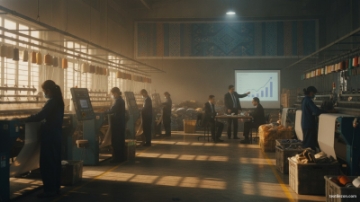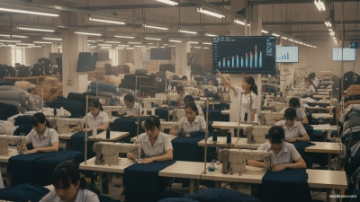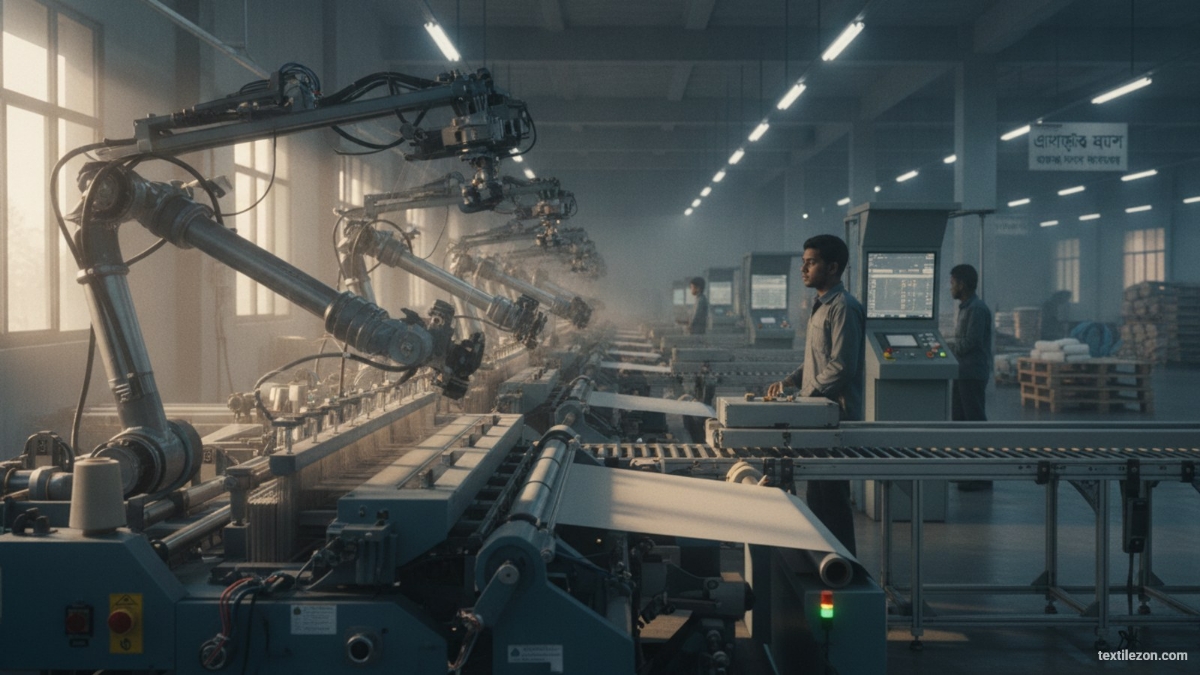
Garment automation is accelerating across Bangladesh's apparel sector, and the consequences could be severe. A new research study projects that nearly 1.22 million jobs may be displaced by 2041 if parallel investments in skills development, policy reform, and worker protection do not keep pace. Women face the greatest exposure, with up to 60 percent of existing female garment employment at risk as manual roles give way to automated production.
The findings arrive at a critical juncture. Bangladesh is preparing to graduate from least developed country (LDC) status, and the apparel industry remains both the country's largest employer and a cornerstone of export earnings. The scale of potential displacement poses a serious challenge to national economic stability. Stay current with the latest industry shifts through textile news on textilezon.com.
Labour Market Already Under Pressure
Even before automation intensified, Bangladesh's labour market was showing strain. National employment contracted by approximately 1.3 million jobs in 2024, with female workers accounting for nearly nine out of every ten positions lost.
Despite rising manufacturing output, total sector employment remains frozen at around 8.1 million workers. Output and headcount have decoupled — a clear signal that productivity gains are displacing labour rather than expanding the workforce.
Research Findings: A Multi-Scenario Warning
Researchers modeled labour market scenarios through 2035 by analyzing 27 domestic and global indicators. Across all assumptions, five consistent pressures emerged:
- Rapid digitization across production lines
- Escalating demand for higher-value technical skills
- Persistent skill shortages in the current workforce
- Vulnerability to international economic shocks
- Insufficient institutional capacity to manage the transition
The Vocational Education Gap
Technical and vocational education enrolls fewer than one in five secondary-level students in Bangladesh. Public investment in human capital development lags well behind the pace of technological change.
Without significant curriculum reform and increased enrollment, millions of workers risk remaining unprepared for advanced manufacturing roles. Many may shift into informal, low-wage, or gig-based employment with minimal social protection.
Industry Responses and the Policy Imperative
Ha-Meem Group, one of Bangladesh's leading garment producers, has already taken action. The company signed a Memorandum of Understanding (MoU) with a robotics and automation firm to accelerate Industry 4.0 adoption across three pillars: workforce development, industrial automation, and industry-academia collaboration.
The research also identifies broader policy levers that can convert disruption into opportunity:
- Modern vocational training and continuous reskilling programs
- Real-time labour market data systems for targeted intervention
- Employer incentives for workforce investment
- Social protection frameworks for vulnerable groups, especially women
Bangladesh's impending LDC graduation raises the stakes further. As preferential trade access narrows, productivity gains from garment automation become strategically vital — but only if the workforce shares in those gains.
Frequently Asked Questions
How many garment jobs could automation displace in Bangladesh?
A recent study projects that up to 1.22 million garment jobs could be displaced by 2041 if Bangladesh does not invest in worker reskilling, social protection, and targeted policy reforms.
Why are women disproportionately at risk from automation?
Women hold a large share of manual sewing and assembly roles — exactly the positions most vulnerable to automation. Up to 60 percent of existing female garment employment could be at risk as automated systems replace manual operations.
What steps is Bangladesh taking to manage this transition?
Ha-Meem Group has signed an MoU with a robotics and automation firm, focusing on workforce development and Industry 4.0 readiness. Researchers also recommend expanding vocational education, building real-time labour market data systems, and creating robust social protection for at-risk workers.
Bangladesh's garment sector faces both its greatest productivity opportunity and its most complex workforce challenge in a generation. Garment automation can drive competitiveness and export growth, but only if policymakers, industry leaders, and educators act in concert to protect and equip the workforce for the future ahead.