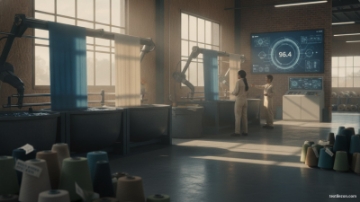
A Spanish textile manufacturer has found a new use for an unlikely raw material — retired firefighter uniforms. Hilaturas Arnau has converted end-of-life protective garments into new fire-resistant fabric, establishing a circular production model for one of the industry's most technically demanding waste streams. The European Cluster Collaboration Platform highlighted this initiative on March 3, 2025.
From Decommissioned Uniform to Industrial Raw Material
Firefighter protective garments have a defined service life. Even when physically intact, fiber degradation over time renders them unfit for active duty — but not without residual industrial value. Hilaturas Arnau identified a pathway to extract that value and redirect it into a new production cycle.
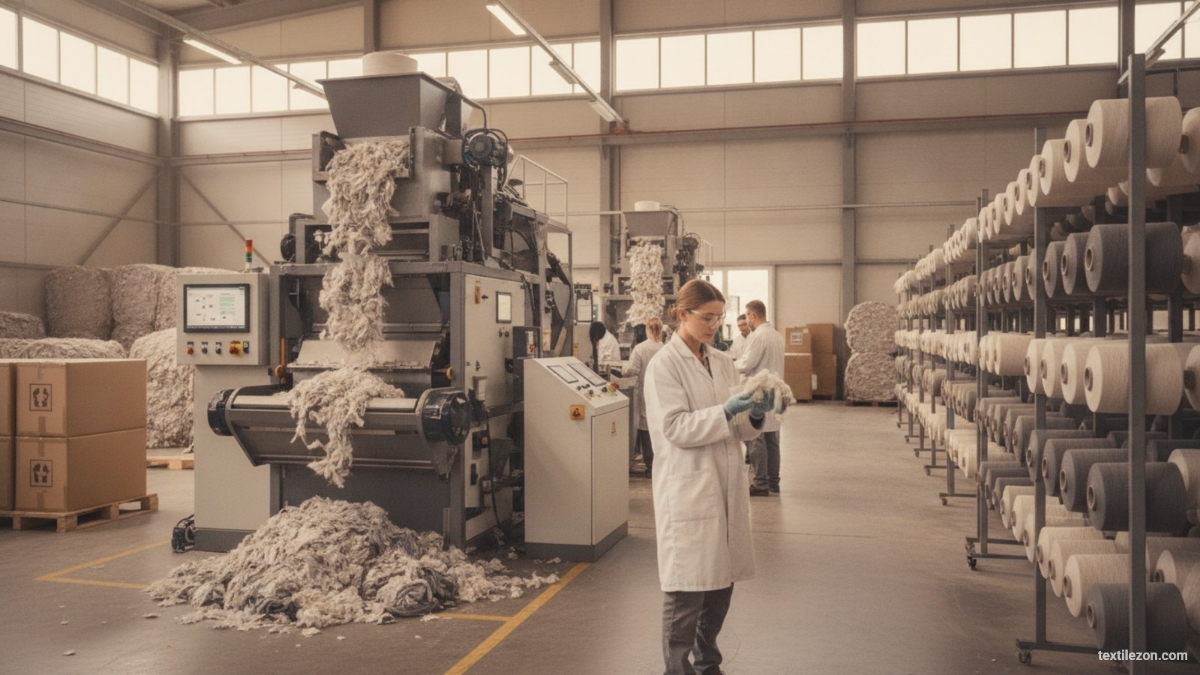
The process blends fibers recovered from used protective clothing with pre-consumer textile waste — factory offcuts generated before goods ever reach the market. This dual-stream approach reduces dependence on virgin raw materials while finding a productive end for materials that would otherwise be discarded.
Fire Performance and the Oxygen Limit Index
A key performance metric for fire-resistant fabric is the oxygen limit index (OLI) — the minimum oxygen concentration required to sustain combustion in a material. The higher the index, the more resistant the material is to ignition.
Standard atmospheric air contains roughly 21% oxygen. Materials with an OLI below 21 ignite easily in ambient conditions, while those above 26 are considered self-extinguishing. Hilaturas Arnau's recycled fabric achieved an oxygen limit index of 45 — nearly double the self-extinguishing threshold.
Safety Standards and Industry Implications
A high OLI result alone does not qualify a recycled fabric for professional protective applications. Safety certifications are mandatory before any recycled material can replace certified protective garments in high-risk environments. Manufacturers must evaluate each intended use independently against applicable safety standards.
Specialty technical fibers retain residual performance properties long after their primary service life ends. Circular processes that capture and redirect this value reduce industrial waste and lower demand for newly manufactured technical fibers. For sourcing and procurement professionals tracking textile sustainability, this initiative signals growing potential in the secondary technical fiber market. Stay ahead of these developments through the textile news section on Textilezon.
Frequently Asked Questions
What has Hilaturas Arnau achieved with discarded firefighter uniforms?
The Spanish company successfully converted decommissioned firefighter uniforms into fire-resistant fabric by blending recovered fibers with pre-consumer textile waste, creating a viable circular production model for technically demanding protective materials.
What oxygen limit index did the recycled fabric achieve?
The material recorded an oxygen limit index of 45 — well above the self-extinguishing threshold of 26 — demonstrating strong fire resistance under standardized testing conditions.
Can this recycled fabric immediately replace certified protective garments?
No. Formal safety certifications are required before any recycled material can substitute for certified protective clothing in hazardous environments. The OLI result is a positive indicator, but it represents only one component of the required evaluation.
The Hilaturas Arnau project establishes a proof of concept for circular fire-resistant fabric production using technically demanding specialty waste streams. As sustainability regulations tighten across Europe, initiatives that recover value from high-performance textile waste will attract increasing attention from manufacturers and procurement professionals worldwide.