The 2026 U.S. Houzz Emerging Summer Trends Report reveals a significant shift in how consumers approach home textiles and interior design. Homeowners are prioritizing tactile, sensory-rich materials that feel personal, natural, and wellness-oriented. For B2B textile professionals, these search-data-driven insights signal strong demand shifts worth tracking now.
Based on year-over-year search growth on Houzz from January–March 2026 versus the same period in 2025, eight distinct trends are reshaping summer interiors. Each trend carries direct implications for textile manufacturers, suppliers, and procurement professionals. You can explore more trend analyses in our articles section on textilezon.com.
Table of Contents
- Tactile Textures: The New Design Priority
- Curves and Soft Geometry in Interiors
- Earthy Color Palettes Driving Material Choices
- Eco-Friendly and Sustainable Material Demand
- Wellness Spaces and Biophilic Design
- Nostalgic Spaces and Analog Entertainment
- Compact Outdoor Areas and European Garden Romanticism
- Frequently Asked Questions
- Key Takeaways for Textile Professionals
Tactile Textures: The New Design Priority
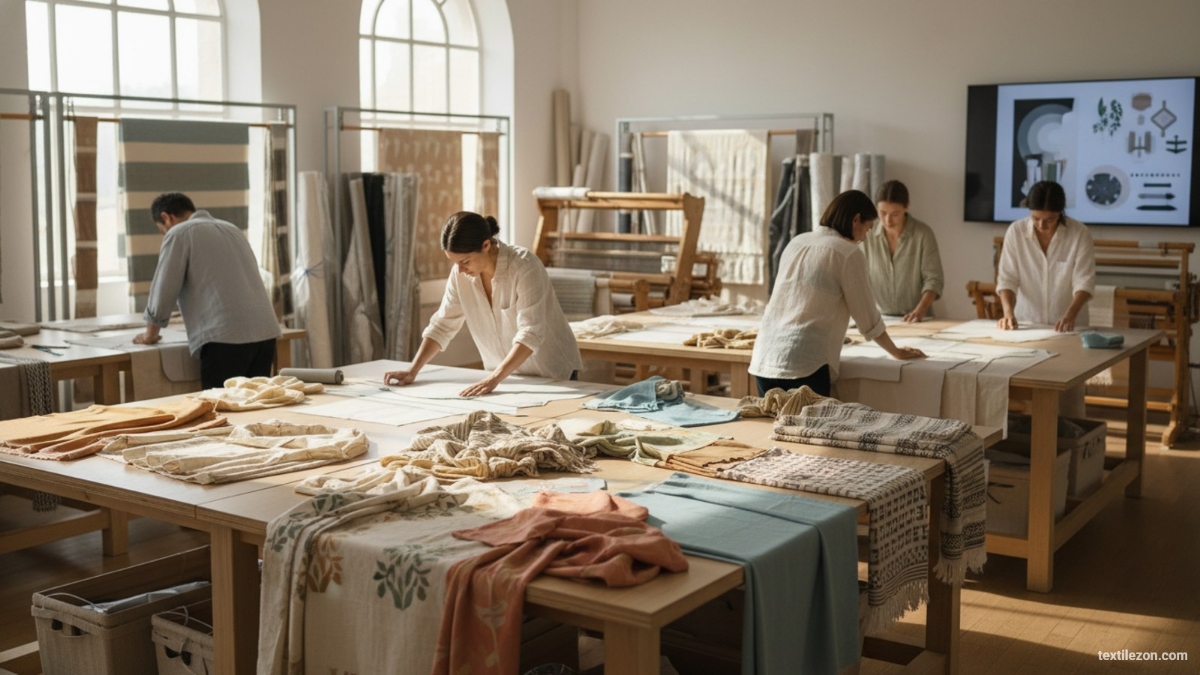
Touch has become as critical as visual aesthetics in modern home textile and interior design. Consumers are moving away from smooth, uniform surfaces toward richly textured materials that engage multiple senses. This shift represents a significant opportunity for natural fiber and specialty textile suppliers.
The Houzz search data is striking. Searches for "sandstone" skyrocketed 257%, while "linen wallpaper" searches doubled, rising 104%. Seagrass wallpaper searches climbed 94%, and "Venetian plaster" saw a 94% search increase as well.
Surface Materials Gaining Momentum
Beyond wall coverings, textured flooring is gaining strong momentum. "Terracotta flooring" searches increased 55%, and "Limewash interior paint" grew 53%. Architectural detailing is also on the rise, with "wainscoting" searches up 32%.
- Linen wallpaper: +104% — signals rising demand for woven natural fiber wall coverings
- Seagrass wallpaper: +94% — plant-based wall applications gaining strong traction
- Sandstone finishes: +257% — mineral-inspired textures in high consumer demand
- Terracotta flooring: +55% — earthy, clay-based surfaces trending strongly
- Venetian plaster: +94% — artisan surface texture making a notable comeback
For textile manufacturers, linen and seagrass in wallcovering applications represent a rapidly growing adjacent market. Producers supplying these natural fibers should note the accelerating consumer pull for authentic, touchable materials in home interiors.
Curves and Soft Geometry in Interior Design
Rounded silhouettes and wave-like details are moving beyond furniture into architectural features and soft furnishings. Homeowners are replacing rigid, geometric forms with softer, more fluid designs. This trend directly influences upholstery, cushion, and drapery fabric choices across the home textiles segment.
"Scalloped tile" searches surged more than 3x year-over-year, while "wave tile" searches grew 38%. These graceful forms create visual movement and softness in interiors. Textile suppliers offering fabrics with organic patterns, scalloped trims, or wave-textured weaves are well-positioned for this trend.
Upholstery and Soft Furnishing Implications
Curved furniture forms require fabrics with excellent drape and flexibility. Natural fibers like linen, cotton blends, and bouclé are ideal for the organic aesthetic consumers now prefer. Technical wovens with subtle texture and softness are gaining favor over stiff, flat-weave alternatives.
Earthy Color Palettes Driving Material Choices
Rich, warm earth tones are dominating 2026 summer interior palettes. These hues feel grounding, cozy, and timeless — qualities that resonate strongly with current consumer psychology. For textile professionals, this palette shift carries direct implications for dyeing, printing, and fabric sourcing decisions.
"Rust colors" jumped 178% in searches, while "chocolate brown" climbed 153%. Softer neutrals are also trending across multiple search categories simultaneously.
Key Color Search Growth Data (YoY)
| Color | Search Growth (%) |
|---|---|
| Rust | +178% |
| Chocolate Brown | +153% |
| Mushroom | +69% |
| Sage | +55% |
| Taupe | +50% |
| Cream | +44% |
Textile manufacturers and dye houses should prioritize these tones in their 2026 collections. Natural dye techniques and sustainable pigment processes align well with the earth-tone aesthetic consumers are actively seeking. The shift away from bright synthetic palettes supports the broader move toward authentic, natural materials in home textile production.
Eco-Friendly and Sustainable Material Demand
Sustainable design has moved from niche preference to mainstream purchasing priority. Houzz data reveals that eco-conscious decision-making is reshaping every layer of the home interior market. Textile suppliers who document sustainability credentials now hold a distinct competitive advantage in procurement conversations.
Searches for "solar energy" soared nearly 18x, and "repurposed materials" searches almost tripled. Other significant eco-friendly search trends include:
- Permeable patio: +137%
- Recycled glass countertop: +84%
- Native landscape: +59%
- Bamboo flooring: +32%
Sustainable Fibres and Home Textile Opportunities
Bamboo flooring's 32% search growth reflects broader consumer appetite for plant-based, rapidly renewable materials. This trend extends naturally to bamboo-based textiles — bamboo viscose, bamboo cotton blends, and bamboo fiber yarns. Demand for repurposed materials equally signals market interest in recycled polyester, upcycled cotton, and regenerative fiber products.
For B2B suppliers, certifications such as OEKO-TEX, GOTS, and GRS are increasingly important differentiators. Buyers sourcing for home textile applications face growing pressure from retail and contract channels to demonstrate sustainability across the full supply chain.
Wellness Spaces and Biophilic Design
The home-as-sanctuary concept has moved from aspiration to active investment. Consumers are dedicating rooms and budgets to wellness, relaxation, and mental wellbeing. This creates specific demand for soft, breathable natural fiber textiles and calming, nature-inspired aesthetics in home furnishings.
Searches for "wellness room" surged 164%, while "calming" as a design keyword grew 139%. Biophilic design — incorporating nature into built environments — saw searches climb 112%, and "spa" searches rose 68%.
Wellness Search Trend Breakdown
- Wellness room: +164%
- Calming design: +139%
- Biophilic design: +112%
- Spa aesthetics: +68%
- Home gym: +46%
- Sensory room: +43%
- Yoga room: +20%
Biophilic design prioritizes natural materials, organic textures, and living elements throughout the home environment. For textile suppliers, this means heightened demand for organic cotton, linen, jute, wool, and other natural fiber products used in upholstery, floor coverings, window treatments, and decorative textiles.
Nostalgic Spaces and Analog Entertainment
Homeowners are creating dedicated spaces for screen-free entertainment and social connection. These nostalgic rooms favor rich, layered interiors with warm textiles, dark wood, and plush upholstery. The aesthetic draws from classic library, speakeasy, and drawing room design traditions.
"Mahjong room" searches skyrocketed nearly 20x year-over-year, and "bibliothèque" searches rose 191%. "Card room" searches climbed 129%, "speakeasy" searches grew 75%, and "board game room" searches increased 45%.
Textile Characteristics for Nostalgic Interiors
These spaces demand upholstery fabrics with richness, depth, and durability — velvet, chenille, leather alternatives, and heavy cotton weaves. Deep tonal colorways, consistent with the earth tone palette trend, complement the nostalgic aesthetic effectively. Rugs, curtains, and cushion fabrics are essential in creating the layered, cozy atmosphere these rooms require.
Compact Outdoor Areas and European Garden Romanticism
Two converging outdoor trends are reshaping demand for exterior home textiles: the rise of small-scale gardens and the surge in European-inspired courtyard aesthetics. Both create clear opportunities for weather-resistant, aesthetically refined outdoor fabrics that balance beauty with performance.
Searches for "small front yards" grew 79%, "small courtyards" rose 63%, and "small patio garden" increased 57%. On the European inspiration side, "French courtyards" searches soared nearly 6x, "Italian courtyards" grew 4.5x, "cottage patios" climbed 204%, and "English cottage patios" rose 131%.
The shift toward intimate, European-inspired outdoor spaces elevates demand for refined outdoor textiles. Consumers are moving beyond purely functional fabrics toward aesthetically rich options: woven outdoor rugs, decorative cushion fabrics, weather-resistant linens, and shade textiles with heritage-inspired patterns. Fabric suppliers serving the outdoor furniture and décor segment should align product development with this direction now.
Frequently Asked Questions
What data source underpins the 2026 Houzz Emerging Summer Trends Report?
The report is based on year-over-year search growth from U.S.-based searches on Houzz, comparing January–March 2026 against January–March 2025. It draws on activity from U.S. home professionals, homeowners, and design enthusiasts on the platform.
Which natural fibers benefit most from the tactile texture trend?
Linen, seagrass, jute, and sisal are the primary beneficiaries. Searches for linen wallpaper rose 104% and seagrass wallpaper grew 94%, indicating strong consumer pull for woven natural fiber wall-covering applications. These fibers also align with broader eco-friendly and wellness design priorities dominating 2026 home interiors.
How does the earthy color palette trend affect textile dyeing and production?
Rust, chocolate brown, mushroom, sage, taupe, and cream are the fastest-growing color searches for 2026. Dye houses and manufacturers should prioritize these tones in current collections. The trend favors natural and low-impact dyeing processes that authentically produce earthy, mineral-inspired hues.
What does biophilic design mean for home textile suppliers?
Biophilic design integrates natural elements, materials, and textures into interior spaces to support human wellbeing. For home textile suppliers, this creates elevated demand for organic cotton, linen, wool, jute, and bamboo fiber products used across all furnishing and décor categories.
Which outdoor fabric segments align with the European garden romanticism trend?
Weather-resistant woven fabrics, decorative outdoor cushion textiles, shade and canopy materials, and heritage-patterned outdoor rugs are most relevant. The trend emphasizes refinement over pure function, creating demand for outdoor fabrics with softer hand feels, muted earth tones, and artisan-inspired weave structures.
Key Takeaways for Textile Professionals
The 2026 Houzz summer trends report delivers clear directional signals for the home textiles industry. Eight converging consumer trends translate directly into material, color, and product development priorities for manufacturers, suppliers, and buyers across the global market.
- Natural fibers are surging: Linen, seagrass, bamboo, and organic cotton align with multiple converging consumer trends simultaneously.
- Earth tone palettes are dominant: Rust, chocolate brown, sage, and taupe lead 2026 color demand for home textiles.
- Sustainability credentials are now essential: Eco-friendly search terms are growing 2x to 18x, signaling elevated buyer expectations across the full supply chain.
- Wellness drives material choices: Softness, breathability, and biophilic material associations are key purchasing criteria entering the 2026 season.
- Outdoor textiles need aesthetic elevation: European-inspired designs demand refined, weather-resistant fabrics with heritage-inspired character beyond basic performance specs.
Textile professionals who align product portfolios, color development, and sustainability messaging with these data-driven consumer trends will secure strong positioning for the 2026 home season. The market is moving decisively toward authenticity, natural materials, and sensory richness — and Houzz search data confirms that consumer demand is already well ahead of the curve.