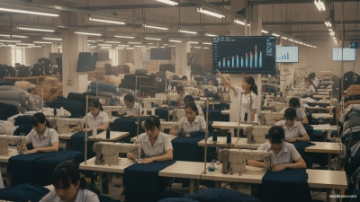
The garment industry in Syria is facing a mounting crisis as manufacturers grapple with surging production costs, new import tariffs, and stiff competition from foreign goods. Industry leaders warn that without a comprehensive economic strategy, the sector — a critical driver of employment and national output — risks significant contraction.
Import Competition and Second-Hand Clothing Pressure
Garment workshops across major production hubs like Hama are battling intense pressure from imported goods. A particularly disruptive factor is the influx of second-hand "bale" clothing, which undercuts locally manufactured products on price.
Industry experts argue that current open-market policies provide insufficient protection for domestic manufacturers. Local producers struggle to compete with low-priced imports despite the recognized quality of Syrian-made goods.
Industrialists Monther Arhim and Majd Sukari have identified multiple overlapping challenges. High costs for imported fabrics, yarns, and accessories — combined with escalating fuel, electricity, and logistics expenses — have squeezed profit margins to critical levels, forcing some workshops to scale back operations.
New Customs Duties Compound Manufacturing Costs
Since June, several categories of textile yarns and imported fabrics used in production are subject to a new 10% customs duty. Manufacturers point out that total import costs — including shipping, insurance, and domestic transport — compound this burden far beyond the duty rate alone.
The Textile Industries Committees of the Damascus and Rural Damascus Chamber of Industry have issued urgent proposals in response. They urge the government to adopt zero or significantly reduced customs duties on raw materials that have no local alternatives, while maintaining balanced tariffs on finished imported goods.
Mohammad Fawaz Al-Aqqad, a member of the Board of Directors of the Damascus Chamber of Commerce, underscored the scale of dependency: approximately 95% of garment industry inputs are sourced from abroad. Any increase in import costs translates directly into higher retail prices, weakening Syrian producers' competitiveness in both local and regional markets.
Industry Demands Structural Reform Over Subsidies
Industry stakeholders are clear that financial subsidies alone will not resolve the sector's challenges. Their recovery proposals target structural barriers across the entire supply chain:
- Eliminating duties on essential raw materials and imported fabrics.
- Improving the reliability and affordability of energy for industrial use.
- Enhancing logistics and infrastructure to reduce operational costs.
- Implementing export incentives to open access to neighboring markets.
Facilitating exports is seen as especially urgent given the sharp decline in domestic consumer demand. Economists warn that the combination of rising production costs and low purchasing power could accelerate closures of small and medium-sized workshops. B2B professionals tracking developments like this can follow the latest updates through the textile news section on textilezon.com.
Frequently Asked Questions
What is the main challenge facing Syria's garment industry?
The sector faces a combination of rising production costs — including energy, logistics, and imported raw material expenses — alongside intense competition from low-priced foreign imports and second-hand clothing. These pressures are narrowing margins and threatening the viability of workshops across the country.
How do the new customs duties affect Syrian garment manufacturers?
Since June, a 10% duty applies to imported textile yarns and fabrics used in production. Because approximately 95% of garment industry inputs are sourced abroad with no local substitutes, these duties directly raise production costs and push retail prices higher.
What reforms are Syrian manufacturers demanding?
Manufacturers are calling for zero or reduced duties on essential raw materials, more affordable and reliable industrial energy, improved logistics infrastructure, and export incentives to help Syrian goods reach neighboring regional markets competitively.
The path forward for Syria's garment industry depends on decisive policy action that addresses both cost structures and market access. Without targeted reforms to import duties and energy costs, the sector faces further contraction — and the loss of thousands of jobs across the country's manufacturing base.