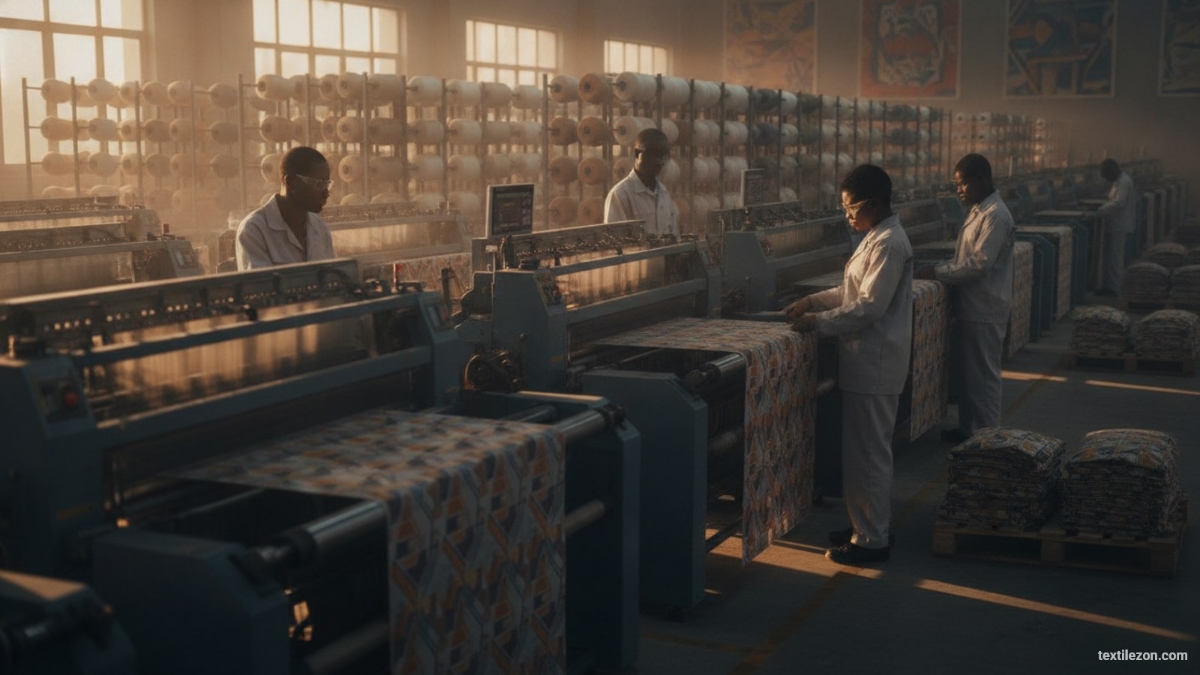
The Nigeria textile industry is recording a significant recovery in 2026, backed by coordinated government policy, rising domestic demand, and an expanding network of small and medium-sized enterprises. Industry representatives estimate that textile production grew by approximately 45% in 2026, reflecting stronger activity across garment manufacturing. For B2B buyers and suppliers tracking African markets, Nigeria's revival illustrates the impact of domestic-led industrial policy.
Government Policy Anchors Nigeria Textile Recovery
The cornerstone of the recovery is the Federal Government's National Cotton, Textile and Garment Industrial Transformation Program (NCTG-ITP). This initiative targets the full cotton-to-clothing value chain, aiming to cut import reliance and stimulate employment through domestic manufacturing.
The program has already delivered measurable results. A six-month pilot produced 10,000 T-shirts using entirely Nigerian-grown cotton, proving that locally sourced materials can support competitive garment output when the supply chain operates efficiently.
Under Executive Order 003, federal ministries and public agencies must prioritise Nigerian-made goods in procurement. Several state governments have reinforced this mandate by requiring locally manufactured uniforms for public-sector employees, giving textile producers a more reliable and stable demand base.
Domestic Demand and SME Growth Power Expansion
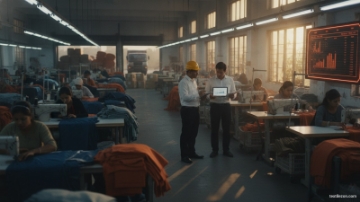
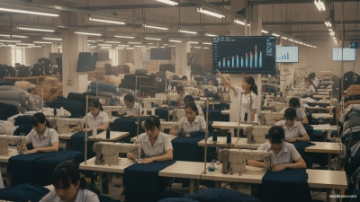
Consumer preference for Made-in-Nigeria clothing is gaining clear ground. Local factories have scaled up production of T-shirts, jerseys, jackets, trousers, and workwear as both public procurement and private demand increase simultaneously.
SMEs are leading this expansion, filling production gaps left by the decline of large mills. Industry leaders believe restoring the full cotton, textile, and garment ecosystem could generate more than 1.5 million jobs over the coming years, with particular benefits for women and young entrepreneurs across Nigeria.
Stay current with global industry developments by following the latest textile news on Textilezon.
Structural Challenges Constrain Full Sector Revival
Despite positive recovery signals, serious obstacles persist. Official figures show textile imports rose during 2025, while textile exports declined considerably — a divergence that highlights the sector's continued reliance on domestic consumption rather than international trade.
The mill count tells a stark story. Fewer than 20 textile mills remain operational in Nigeria today, down sharply from more than 180 active facilities several decades ago. Manufacturers continue to face persistent headwinds:
- High electricity costs eroding factory competitiveness
- Restricted financing access for SMEs and mid-size producers
- Ageing production equipment requiring capital-intensive upgrades
- Illegal import competition undercutting domestic pricing
The next strategic milestone for Nigeria's textile sector is converting domestic manufacturing gains into export performance under the African Continental Free Trade Area (AfCFTA). Sustained policy commitment, infrastructure investment, and deeper value chain integration will determine whether Nigeria can build a globally competitive textile industry on its current domestic foundation.
Frequently Asked Questions
How much did Nigeria's textile production grow in 2026?
Industry representatives estimate that Nigeria's textile production expanded by approximately 45% in 2026. This growth reflects stronger garment manufacturing activity and a rapidly growing base of SMEs operating across the sector.
What is the NCTG-ITP and what has it achieved so far?
The National Cotton, Textile and Garment Industrial Transformation Program (NCTG-ITP) is a Federal Government initiative designed to rebuild Nigeria's integrated cotton-to-clothing value chain. Its pilot project has already produced 10,000 T-shirts using locally grown cotton, demonstrating viable domestic supply chain integration at scale.
How many textile mills are currently operating in Nigeria?
Fewer than 20 textile mills remain operational in Nigeria today, compared with more than 180 active mills several decades ago. This sharp decline reflects the structural pressures — high energy costs, limited financing, and illegal imports — that continue to constrain a full industrial recovery.