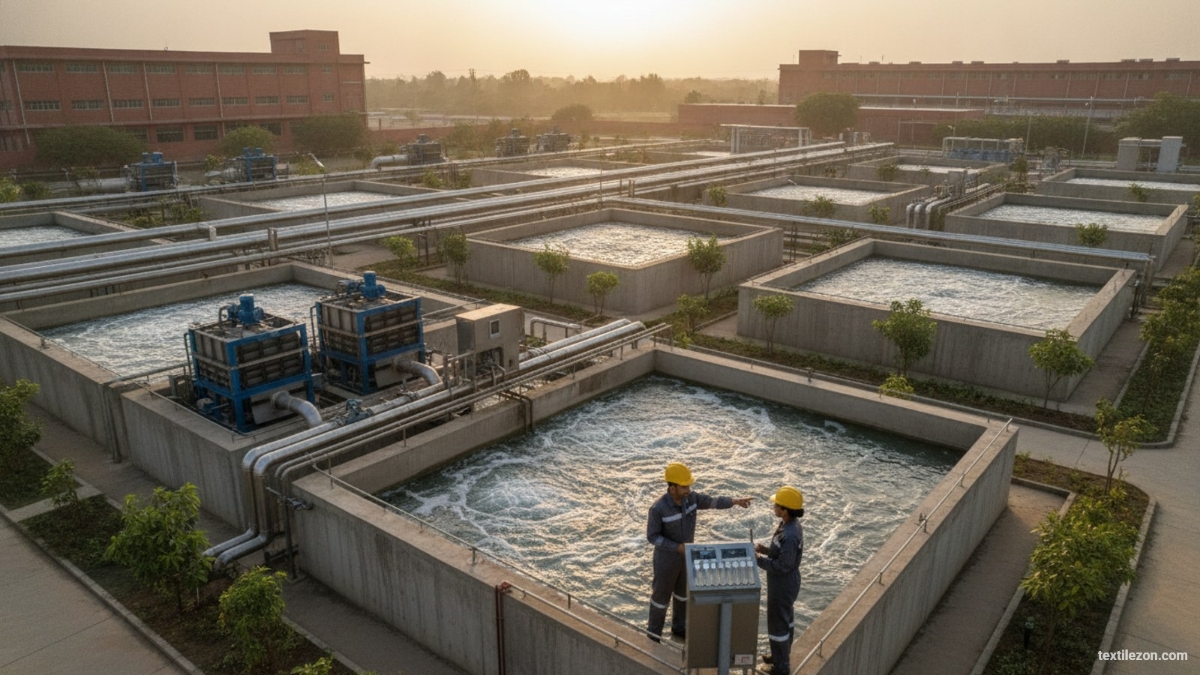
The Sanganer textile cluster in India is approaching near-complete effluent treatment coverage. Once a critical pumping station is completed in August, virtually all member units will join the Common Effluent Treatment Plant (CETP) network. This milestone advances India's textile sector toward stronger environmental compliance and sustainable manufacturing standards.
Current CETP Connection Status in the Sanganer Cluster
Official data confirms that 758 of the 892 member textile units in Sanganer are already connected to the CETP network. This accounts for approximately 85% of the cluster's membership — a solid compliance baseline ahead of the pumping station's completion. Sanganer, situated near Jaipur in Rajasthan, is one of India's most active hubs for textile printing and dyeing operations.
The cluster's progress reflects the textile sector's growing commitment to responsible industrial wastewater management. With both domestic pollution control norms and international buyer requirements tightening, CETP connectivity is increasingly viewed as a fundamental compliance requirement for competitive textile manufacturers. Track the latest developments in India's textile sector on Textilezon's textile news page.
Pumping Station Set to Connect Remaining Units in August
The units not yet covered are expected to join the CETP network once the August pumping station work is complete. This infrastructure addition extends the network's physical reach to cluster areas currently outside its coverage zone. Industry officials report the August completion target remains on schedule.
For smaller textile units, CETP connection removes the burden of managing individual wastewater treatment systems. Centralized processing through the CETP delivers consistent effluent treatment quality at a significantly lower cost per unit — making compliance practical for operations of all sizes within the cluster.
Export Implications and Industry Outlook
Near-full CETP coverage positions the Sanganer cluster more competitively in export markets that require documented environmental compliance. Buyers from the EU, the UK, and North America now routinely conduct environmental audits and require certifications from textile supply chain partners. Full CETP integration provides a verifiable, auditable compliance record that meets these international sourcing requirements.
The key benefits of complete CETP coverage for the Sanganer cluster include:
- Shared infrastructure costs lowering individual unit compliance expenditure
- Standardized effluent treatment quality across all 892 member units
- Improved standing in international buyer due diligence and audit processes
- Reduced risk of regulatory penalties and unplanned production shutdowns
The Sanganer cluster's phased approach — expanding CETP reach through targeted pumping station infrastructure — offers a replicable model for textile clusters across South Asia and other emerging manufacturing regions. As India's textile industry scales its compliance efforts, centralized treatment networks like Sanganer's provide a cost-effective and auditable framework for sustainable growth.
Frequently Asked Questions
What is a CETP and why is it important for textile units?
A Common Effluent Treatment Plant (CETP) is a shared facility that collectively treats industrial wastewater from multiple manufacturing units. For textile producers, it provides a cost-efficient route to meet effluent treatment standards without the expense of building and maintaining individual treatment systems.
How many textile units in Sanganer are currently on the CETP network?
As of the latest official data, 758 of the 892 member textile units in the Sanganer cluster are connected to the CETP network, representing approximately 85% of cluster membership.
When will the Sanganer cluster achieve near-complete CETP coverage?
Near-complete coverage is expected following the completion of a key pumping station in August, which will connect the remaining member units and bring virtually all 892 units under the common effluent treatment network.