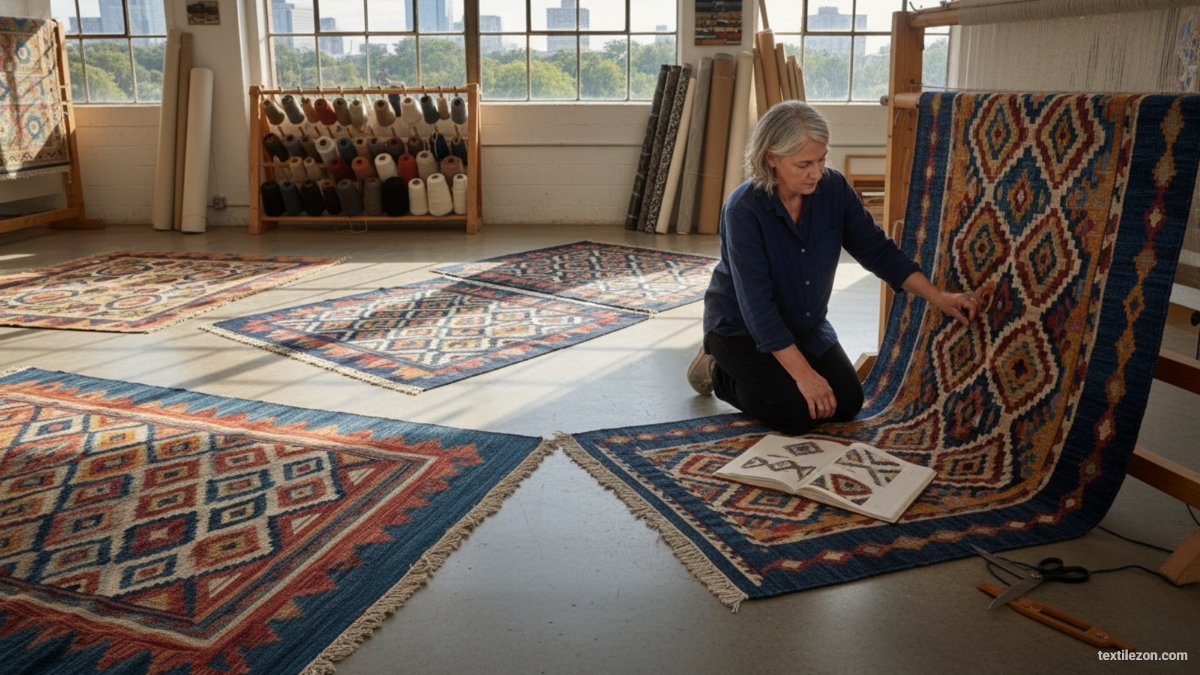
Hand-knotted rugs represent one of the most technically demanding and culturally rich expressions of textile craftsmanship. The Rug Company, a London-based luxury rug maker, has unveiled Ratio by Paul Smith — a collection that reinterprets modernist geometric principles through artisanal rug production. For B2B buyers in the home textiles sector, Ratio signals broader market trends in craft-led luxury floor coverings.
Understanding the design and technical context behind collections like Ratio matters for textile manufacturers, importers, and interior procurement professionals. It illuminates the growing value placed on artisanal technique — and the premium pricing it commands — within the global rug trade.
Table of Contents
- Bauhaus Design Principles in Contemporary Rug-Making
- The Four Designs of Ratio
- Technical Innovation: Tulu Knotting Meets Indo-Nepali Craft
- The Rug Company's Heritage of Artisanal Collaboration
- Designer Collaborations in the Luxury Rug Sector
- Market Implications for Home Textile Professionals
- Frequently Asked Questions
Bauhaus Design Principles in Contemporary Rug-Making
The Bauhaus school, founded in Germany in 1919, established a design philosophy built on order, geometry, and the unity of art and craft. Paul Smith, a longstanding admirer of modernist design, applies these principles directly to the Ratio collection. His approach focuses on precision — repeating forms, controlled proportions, and structured rhythm.
In rug design, Bauhaus-inspired geometry presents specific challenges. Unlike flat graphic work, a hand-knotted rug introduces pile depth, material weight, and tactility that can soften or reinforce geometric clarity. Smith uses this tension deliberately, allowing pattern discipline to coexist with the inherent warmth of natural fiber.
This design language resonates strongly with B2B buyers seeking home textile products that carry cultural authority and aesthetic differentiation. Geometric modernism in floor coverings consistently commands premium positioning across global luxury interior markets.
The Four Designs of Ratio
The Ratio collection comprises four distinct rug designs, each offering a different interpretation of geometric order: Axis, Stil, Raster, and Takt. Together, they span a range of visual and tactile approaches — from subtle modulation to bold structural repetition. The collection moves between restraint and richness, always anchored in modernist composition.
Axis and Stil
Axis explores directional geometry — forms that suggest movement and orientation through controlled line work. Stil takes a more restrained approach, emphasizing proportion and negative space. Both designs demonstrate Smith's characteristic balance between discipline and expressiveness, a quality evident across his fashion and accessories output.
Raster
Raster draws on grid-based structures, creating micro-geometric compositions that reward close inspection. The name references the German word for grid, signaling the Bauhaus heritage directly. At surface level, Raster reads as restrained; up close, the complexity of the knotted structure becomes apparent.
Takt: The Technical Centerpiece
Takt is the technical highlight of the Ratio collection. The design showcases a craft innovation developed by The Rug Company's artisans, merging two distinct knotting traditions within a single piece. This makes Takt both a design statement and a demonstration of advanced manufacturing capability in hand-knotted rug production.
Technical Innovation: Tulu Knotting Meets Indo-Nepali Craft
The most significant technical development within Ratio appears in the Takt design. It combines Tulu knotting with Indo-Nepali Persian hand knotting, merging the precise, sculptural character of Tulu pile with the dense, plush tactility of Indo-Nepali construction. The result is a surface that delivers both geometric clarity and sensory richness.
Understanding Tulu Knotting
Tulu knotting originates from Anatolia and is distinguished by long, shaggy pile achieved through a looped knotting method. The technique creates a three-dimensional, textured surface well suited to bold geometric patterns. Tulu rugs are traditionally associated with graphic designs and irregular pile heights that add sculptural dimension to the finished piece.
The Indo-Nepali Persian Tradition and Technical Fusion
Indo-Nepali Persian hand knotting is renowned for its density and plush surface finish. Using Persian knot (Senneh) or Turkish knot (Ghiordes) methods adapted through Nepali weaving traditions, this technique produces fine, luxurious pile suitable for detailed pattern work. The Rug Company has maintained close partnerships with Nepalese artisans since its founding, making this technique central to its manufacturing identity.
Merging these two knotting traditions within a single rug requires significant craft expertise. Pile height, knot density, and fiber behavior differ substantially between the methods. The Rug Company's artisans developed a process that integrates both without compromising structural integrity or visual clarity — a genuine technical achievement in luxury hand-knotted rug production.
The Rug Company's Heritage of Artisanal Collaboration
The Rug Company built its reputation on combining Western design vision with Nepalese artisanal skill. Since its inception, the brand has worked closely with craftspeople in Nepal, where generations of expertise in hand-knotted rug production provide the technical foundation for each collection. This partnership model ensures design ambition is consistently matched by manufacturing capability.
Nepal has emerged as a significant hub for premium hand-knotted rug production globally. Its skilled workforce supports demand from high-end interior design markets worldwide, with The Rug Company serving as a leading channel for this artisanal expertise into international retail and contract sectors.
The recent appointment of Will Cooper as creative director signals a new strategic chapter for the company. Cooper's arrival is expected to bring fresh design direction while building on the established artisanal infrastructure. Industry observers note that such leadership transitions often accelerate collaboration programs and expand market positioning.
Designer Collaborations in the Luxury Rug Sector
The Rug Company has built a distinctive identity through sustained collaboration with internationally recognized designers and artists. Its roster includes Alexander McQueen, who began creating rugs as works of art and limited-edition tapestries in 1997, as well as Diane von Furstenberg, Dale Chihuly, and Rodarte. Each collaboration has extended the brand's reach across fashion, fine art, and design communities.
Paul Smith joins this lineage with Ratio, reinforcing The Rug Company's position at the intersection of design culture and textile craft. For B2B buyers, collaborations of this kind carry direct market signal value — they reflect consumer appetite for design-led products that justify premium price points and generate editorial attention across multiple sectors.
Designer partnerships in the luxury rug sector serve multiple commercial functions. They create collectible product lines with limited-edition positioning, expand distribution into lifestyle and gallery retail channels, and generate sustained brand press. For manufacturers and importers, these collaborations represent a segment where craft storytelling directly supports margin retention.
Market Implications for Home Textile Professionals
The Ratio collection reflects several trends relevant to professionals in the home textiles sector. The continued demand for technically distinguished hand-knotted products signals sustained investment by luxury brands in craft-based manufacturing. The cross-disciplinary nature of the collaboration also mirrors a wider blurring of category boundaries across home textiles, fashion, and contemporary design.
The global hand-knotted rug market continues to show resilience against machine-made alternatives. Premium artisanal products — particularly those with strong design provenance — maintain pricing power in both B2B contract and consumer luxury channels. Technical innovations like hybrid knotting methods provide verifiable differentiation that supports higher price architecture across distribution tiers.
B2B buyers sourcing decorative floor coverings for contract or retail channels should monitor craft-innovation developments closely. Design authority, verified technique, and cultural partnership narrative all contribute to sustainable product differentiation in a competitive market. Textilezon's Info Center provides ongoing coverage of home textile developments and artisanal manufacturing trends for procurement professionals worldwide.
Frequently Asked Questions
What is the Ratio collection by Paul Smith?
Ratio is a hand-knotted rug collection created in collaboration between Paul Smith and The Rug Company. The collection comprises four designs — Axis, Stil, Raster, and Takt — each rooted in Bauhaus geometric principles. The rugs are produced using artisanal knotting techniques by Nepalese craftspeople.
What knotting technique is used in the Takt rug?
The Takt rug merges Tulu knotting with Indo-Nepali Persian hand knotting. This hybrid technique was developed by The Rug Company's artisans to combine the sculptural precision of Tulu pile with the dense, plush tactility of Indo-Nepali construction. It represents a technical innovation unique to the Ratio collection.
What is Tulu knotting and where does it originate?
Tulu knotting is an Anatolian rug-making technique using a looped method to create long, shaggy pile. It produces a three-dimensional, textured surface well suited to bold geometric patterns and varied pile heights. The technique is traditionally associated with graphic compositions and sculptural surface quality.
Who are The Rug Company's previous design collaborators?
The Rug Company has collaborated with Alexander McQueen, who began creating rugs as works of art and limited-edition tapestries in 1997, as well as Diane von Furstenberg, Dale Chihuly, and Rodarte. Each designer translates a distinct visual language into hand-knotted rug form. These partnerships position The Rug Company as a global leader in design-led luxury floor coverings.
Why do hand-knotted rugs command premium pricing in B2B markets?
Hand-knotted rugs command premium pricing due to intensive labor, specialized craft skill, and the use of quality natural fibers. Technical innovations like hybrid knotting methods further differentiate premium products from machine-made alternatives. Strong design provenance and artisanal narrative support higher price architecture in both contract and retail channels.
Key Takeaways
Ratio by Paul Smith and The Rug Company demonstrates the continued strength of artisanal craft in the luxury home textiles sector. The collection's four designs — rooted in Bauhaus geometry — showcase design discipline alongside genuine technical ambition. The Takt rug's pioneering hybrid of Tulu and Indo-Nepali Persian knotting sets a new benchmark in hand-knotted rug manufacturing.
- Ratio comprises four Bauhaus-inspired designs: Axis, Stil, Raster, and Takt
- Takt introduces a documented technical innovation merging Tulu knotting with Indo-Nepali Persian hand knotting
- The Rug Company's Nepalese artisan partnerships underpin its premium manufacturing capability
- Alexander McQueen's collaborations with the brand date to 1997, establishing a long lineage of design-led rug collections
- Will Cooper's appointment as creative director signals a new phase of design ambition at The Rug Company
For home textile professionals and B2B buyers, collections like Ratio set a clear benchmark — design authority and craft innovation together create the most resilient positioning in premium floor coverings. Explore further insights on artisanal textile manufacturing and home textiles market trends in the Info Center at Textilezon, your resource for global textile industry intelligence.