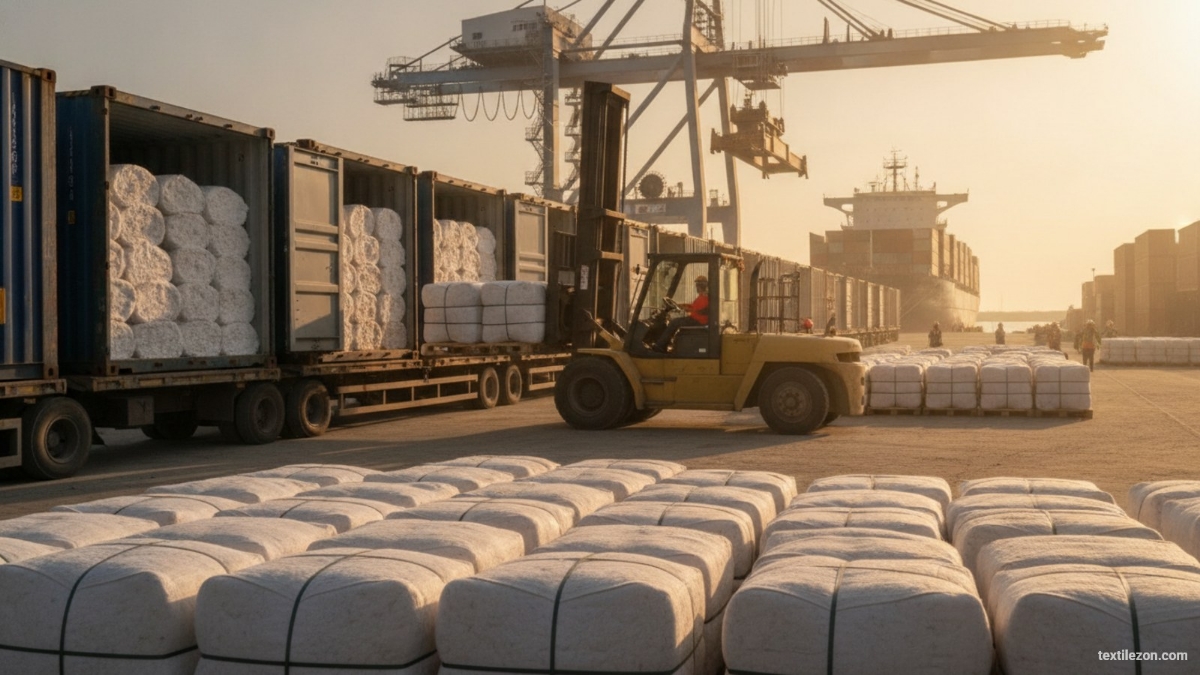
Afghan cotton is set to become a bigger part of Uzbekistan's textile supply chain. Uzbekistan has pledged to import 100,000 tonnes of Afghan cotton every year, marking a major step in its economic partnership with Afghanistan. Uzbek Deputy Prime Minister Jamshid Khojaev announced the commitment during a high-level visit to Kabul. The agreement covers trade, transport, agriculture, and infrastructure cooperation between the two neighbouring countries.
Uzbekistan-Afghanistan Cotton Trade Deal Details
The Uzbek delegation met senior Afghan officials, including representatives from the State-Owned Companies Authority and the National Development Company. Discussions centered on accelerating bilateral investment and improving agricultural productivity. Both sides also reaffirmed support for the Trans-Afghan Railway, a transport corridor designed to link Central Asia with South Asian markets.
Uzbekistan will supply Afghanistan with improved cotton seeds and chemical fertilizers to raise crop yields. This support aims to strengthen Afghanistan's cotton production capacity ahead of the new import agreement. Officials expect these measures to make Afghan cotton exports more competitive across regional markets.
- 100,000 tonnes of Afghan cotton imported annually under the new pledge
- Improved cotton seeds and fertilizers supplied by Uzbekistan to Afghan farmers
- Trans-Afghan Railway prioritized to cut regional transport costs
Trade, Transport, and Infrastructure Cooperation
Bilateral Trade Momentum
Trade between the two countries keeps growing. Afghanistan exported roughly $150 million in goods to Uzbekistan last year, and exports have already reached $111 million so far this year. Total bilateral trade has climbed to approximately $1.6 billion, and both governments aim to expand that figure further through new infrastructure and investment initiatives.
Transport and Logistics Agreements
Afghan Minister of Transport and Civil Aviation Mohammad Fazil Mazloom met Uzbek Transport Minister Ilkhom Makhkamov to discuss cross-border logistics. The two governments agreed to form a joint technical working group that will simplify customs procedures and transit operations. Uzbekistan also pledged to allow more Afghan transit vehicles to enter its territory.
The visit produced the Afghanistan-Uzbekistan Business Forum, where government officials and private companies explored new commercial partnerships. The forum concluded with 22 trade agreements spanning agriculture, logistics, industry, and investment. Uzbekistan also signaled interest in expanding investment across Afghanistan's energy, mining, banking, and industrial sectors. Buyers tracking global fiber sourcing can follow more textile news on cotton trade and regional supply routes via textilezon.com.
Frequently Asked Questions
How much Afghan cotton will Uzbekistan import annually?
Uzbekistan has committed to purchasing 100,000 tonnes of Afghan cotton every year as part of its expanded trade agreement with Afghanistan.
What other sectors does the Uzbekistan-Afghanistan deal cover?
Beyond cotton, the agreement spans agriculture, transport, energy, mining, banking, and industrial investment, along with infrastructure projects like the Trans-Afghan Railway.
How large is current trade between Uzbekistan and Afghanistan?
Bilateral trade has reached approximately $1.6 billion, with Afghanistan exporting $111 million in goods to Uzbekistan so far this year.
Conclusion
The 100,000-tonne Afghan cotton import deal gives Afghanistan a stable export market for a key agricultural commodity. Uzbekistan secures additional raw material supplies for its large textile manufacturing base amid rising regional demand. Stronger transport links, including the Trans-Afghan Railway, could position Central Asia as a growing textile and logistics hub.
Expanded cooperation across 22 signed agreements signals durable momentum for regional cotton and textile trade.