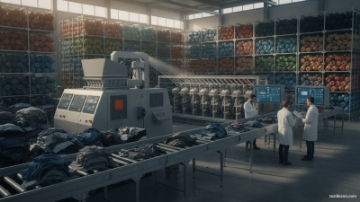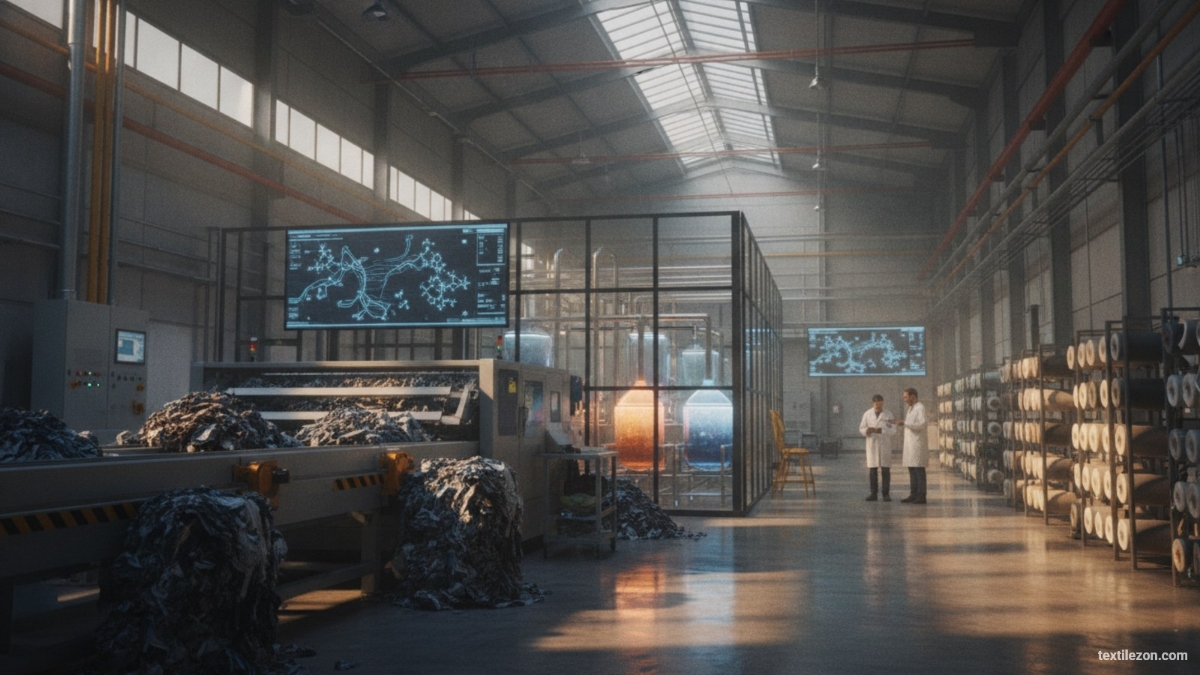
The REMADE Institute has committed $4.86 million to 10 new research projects advancing textile recycling and materials recovery across U.S. manufacturing. Announced July 23, 2026, this seventh funding round supports technologies nearing commercial readiness — directly backing the U.S. Department of Energy's circular economy strategy.
$4.86M Investment Targets Materials Recovery
REMADE operates as a 150-member public-private partnership, launched with an initial DOE investment of $140 million. Since its 2017 founding, the Institute has launched or selected 103 R&D and workforce development projects with a combined value of $104 million. This latest round is cost-shared between REMADE and its funding recipients.
The new DV&V projects focus on technologies at Technology Readiness Level (TRL) 6, targeting TRL 7 by project completion. TRLs 4–7 are commonly known as the "Valley of Death" — the critical phase where innovations struggle to transition from laboratory settings to commercial markets.
"By focusing REMADE's investment on these projects, we are getting closer and closer to fully commercializing these novel technology solutions," said REMADE CEO Nabil Nasr. He emphasized the potential for significant energy, manufacturing, environmental, and economic impact at the national level.
Textile Recycling Among 10 Funded Research Areas
The new funding explicitly targets textile recycling expansion alongside seven other material streams. REMADE CTO Magdi Azer outlined the full DV&V project scope, spanning fiber recovery, metals reuse, AI-driven sorting, and product design circularity:
- Expand textile recycling capabilities
- Recover total rare earth oxides from electronic scrap
- Apply computer vision and AI to reduce electronics recycling costs
- Recover and recycle aerospace and automotive aluminum
- Repair diesel engine blocks via remanufacturing
- Produce new tires using secondary steel
- Improve paper recycling processes
- Increase circularity of new product designs
This is REMADE's seventh funding round. Existing partners include Nike, Adidas, Caterpillar, John Deere, Michelin, Honda, Volvo, MIT, RIT, and Yale University, with the new round welcoming first-time partners not previously affiliated with the Institute.
Industry Implications for Textile Circularity
Federal-level investment in textile recycling technology signals a structural shift toward institutionally supported circularity. As textile news across the sector confirms, brands and manufacturers face mounting pressure to close the fiber waste loop. Applied research that bridges the commercialization gap makes industrial-scale textile recycling economically viable.
With Nike and Adidas embedded in REMADE's partner network, funded research creates a direct bridge between corporate sustainability commitments and scalable, market-ready recycling solutions. B2B suppliers, manufacturers, and procurement professionals should monitor REMADE's project outcomes as leading indicators of near-commercial recycling technologies.
Frequently Asked Questions
What is the REMADE Institute and who funds it?
The REMADE Institute is a 150-member public-private partnership established with a $140 million investment from the U.S. Department of Energy. It funds applied research to advance materials recovery, remanufacturing, and recycling across U.S. manufacturing, with cost-sharing contributions from its industry and academic partners.
How does this funding specifically support textile recycling?
Textile recycling is one of eight targeted material streams in the new $4.86 million round. The funded projects will advance textile recycling technologies from TRL 6 to TRL 7 — the stage immediately before full commercial deployment.
Which major brands are REMADE partners?
Nike and Adidas are established REMADE partners in the textile and apparel space, joined by industrial firms such as Caterpillar, John Deere, Honda, Volvo, and Michelin, plus leading research universities including MIT, RIT, and Yale.