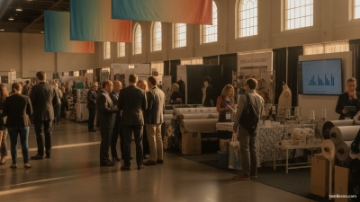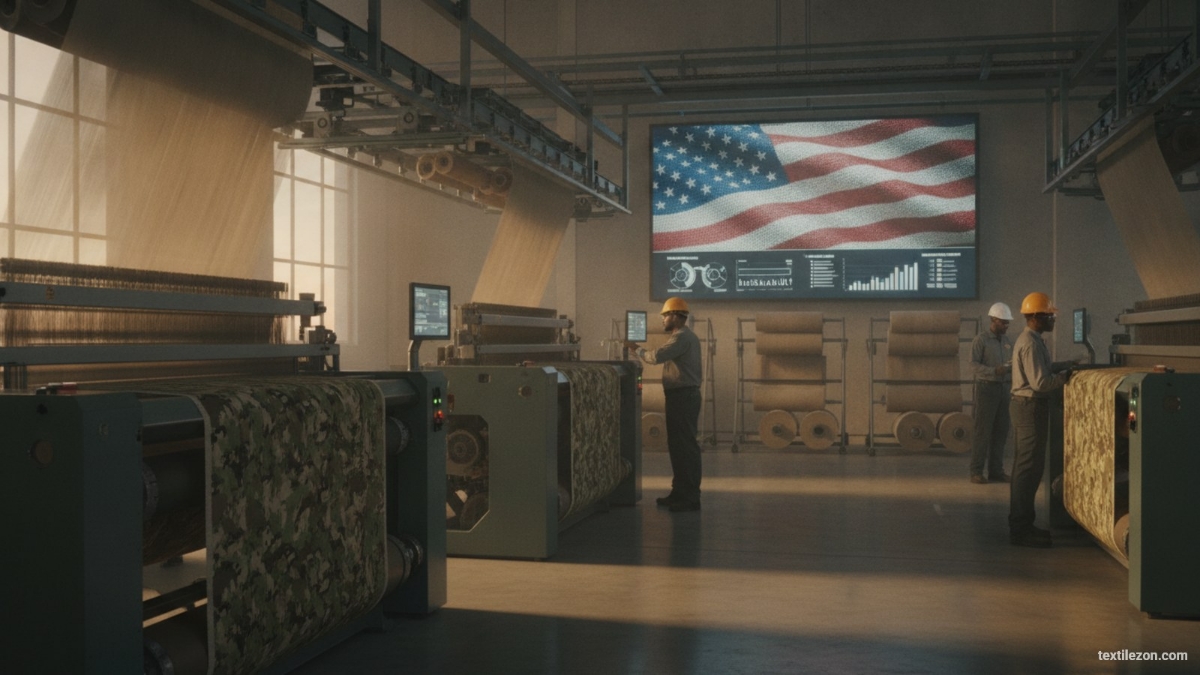
The Berry Amendment received significant legislative backing as the House Armed Services Committee approved the fiscal year (FY) 2027 National Defense Authorization Act (NDAA). The bill embeds a series of reporting requirements designed to tighten Berry Amendment compliance and reinforce the domestic defense textile industrial base. For U.S. textile manufacturers, this development signals growing congressional resolve to protect American military procurement.
The National Council of Textile Organizations (NCTO) — representing textile producers across the entire U.S. supply chain, from fiber to finished sewn products — issued a formal statement commending the committee vote. NCTO's response reflects the importance the domestic industry places on robust Berry Amendment enforcement.
DOD Reporting Requirements in the FY 2027 NDAA
The House NDAA bill authorizes funding levels and sets authorities for the U.S. military each fiscal year. The legislation includes multiple directives ordering Department of Defense (DOD) divisions to improve compliance with the Berry Amendment and Buy American requirements for textiles and apparel.
The committee directed the DOD to complete the following assessments:
- An assessment of waiver usage under the Berry Amendment
- Evaluation of supplier verification and auditing practices
- Actions to align contracting strategies with the long-term health of the domestic defense textile industrial base
- Assessment of the feasibility of narrowing the Berry Amendment small purchase exception from $150,000 to $20,000, broadly and specifically for textiles
- An examination of flame-resistant textile production capacity and supply chain resilience
- An examination of potential non-Berry compliant Army service uniforms
The Case for Narrowing the Small Purchase Exception
The Berry Amendment requires the DOD to purchase 100% U.S.-made textiles and clothing for military personnel. The current $150,000 small purchase exception creates a procurement loophole that allows non-compliant buys below that threshold. Reducing this threshold to $20,000 would bring a significantly larger share of DOD textile spending under Berry coverage.
This single provision could redirect substantial federal spending toward domestic fiber producers, yarn spinners, fabric mills, and apparel manufacturers. Tighter supplier auditing requirements would further improve traceability and compliance across the defense textile supply chain.
NCTO and Congressional Leaders Voice Strong Support
Kim Glas, president and CEO of NCTO, issued a statement in support of the legislation and its potential to drive domestic manufacturing:
"We applaud the HASC for passing the FY 2027 NDAA and including provisions that, if enacted, will lead to increased government purchases of more Made in America textiles and bolster domestic manufacturing and meet the mission-critical needs of our Armed Forces. NCTO looks forward to working with House and Senate lawmakers to ensure these provisions are included in the final FY 2027 NDAA and to advance policies that strengthen the domestic textile industrial base."
Glas also credited Congressman Don Davis (D-N.C.) and Congressman Pat Harrigan (R-N.C.) — co-chairs of the House Berry Amendment Caucus — for leading efforts to strengthen Berry in the House this cycle. NCTO has committed to engaging with both chambers to secure these provisions in the final enacted bill.
For the latest updates on U.S. textile policy and defense procurement news, explore the Info Center on Textilezon.
Frequently Asked Questions
What is the Berry Amendment?
The Berry Amendment is a U.S. law requiring the Department of Defense to procure 100% American-made textiles, clothing, and related products. It creates a protected procurement channel for domestic manufacturers serving the U.S. military.
What does the FY 2027 NDAA propose for Berry Amendment compliance?
The legislation directs the DOD to assess waiver usage, evaluate supplier auditing practices, and examine reducing the small purchase exception from $150,000 to $20,000. It also requires reviews of flame-resistant textile production capacity and potential non-compliant Army service uniforms.
What does this legislation mean for U.S. textile manufacturers?
If enacted, these provisions would increase DOD purchases from American textile producers and strengthen compliance oversight. The proposed reduction in the small purchase exception could significantly expand Berry Amendment coverage, directing more defense spending toward domestic manufacturers.