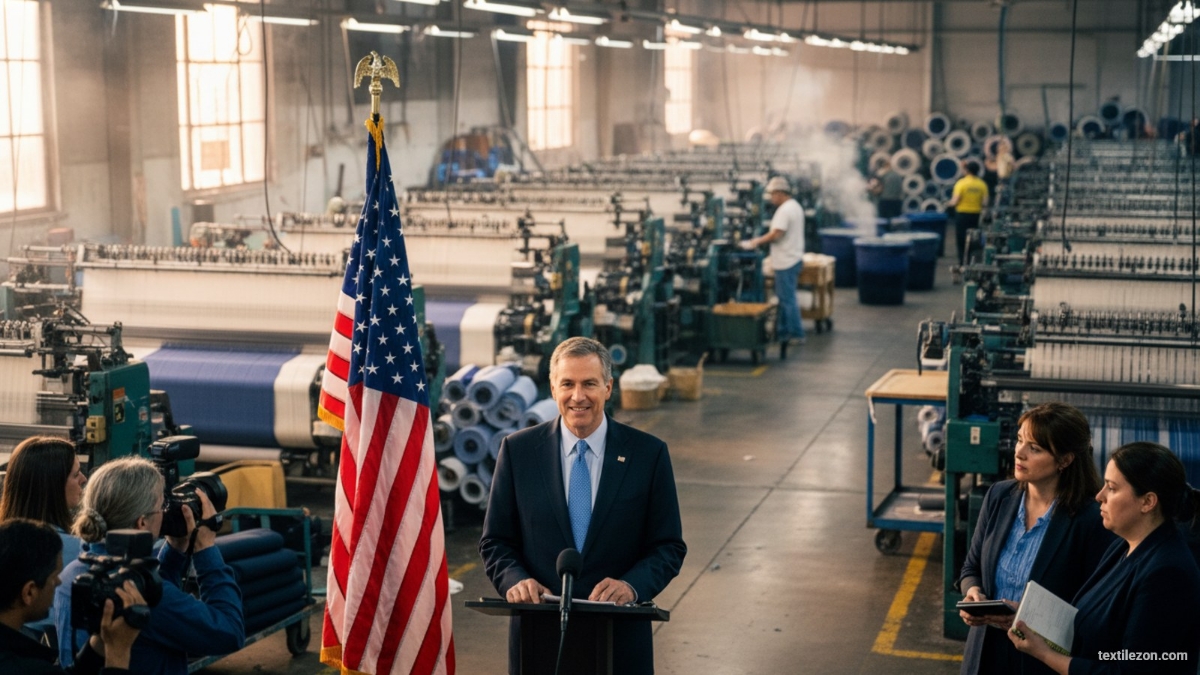
Buy American legislation gained fresh momentum on May 14, 2026, when U.S. Senator Lindsey Graham introduced the Coast Guard Personnel Equipment Act. The bill would mandate that all U.S. Coast Guard uniforms be produced domestically. This move targets a longstanding gap in federal procurement rules and strengthens the domestic textile supply chain.
What the Coast Guard Personnel Equipment Act Requires
Under current U.S. law, every branch of the armed forces must source clothing, fabrics, fibers, and yarns from domestic producers — except the Coast Guard. Senator Graham's bill closes that loophole by extending Berry Amendment protections to the Coast Guard.
Once enacted, the legislation would bar the Coast Guard from purchasing foreign-made personal equipment, including uniforms. This aligns the Coast Guard with procurement rules already governing the Army, Navy, Air Force, Marines, and Space Force.
Industry Leaders Support the Buy American Push
The National Council of Textile Organizations (NCTO) endorsed the bill. NCTO President and CEO Kim Glas praised the legislation for guaranteeing Coast Guard personnel access to the same high-quality, American-made uniforms provided to other military branches.
Glas emphasized the bill's role in strengthening the nation's warm industrial base for mission-critical textile production. Senator Graham stated that over-reliance on foreign nations for military clothing threatens national security.
Graham also highlighted the direct benefits for South Carolina's textile producers and workers. He noted that unfair trade practices have undercut the state's textile sector for decades. The Buy American agenda now has growing support across both the executive and legislative branches.
Recent Executive Actions and Legislative Context
The Coast Guard Personnel Equipment Act builds on a series of recent policy moves favoring domestic manufacturing:
- In February 2026, Senator Graham urged President Trump to ensure all federal law enforcement uniforms are made in the United States.
- Reports surfaced that U.S. federal law enforcement agencies were sourcing uniforms from foreign countries.
- In March 2026, President Trump signed an executive order increasing scrutiny on fraudulent "Made in USA" claims.
- The White House this week echoed calls for all federal agencies to adopt Buy American procurement standards.
These coordinated efforts signal an accelerating shift toward domestic sourcing across defense and federal procurement. Textile manufacturers and textile news watchers on textilezon.com should track these developments closely.
Frequently Asked Questions
What is the Coast Guard Personnel Equipment Act?
It is a bill introduced by Senator Lindsey Graham that would require all U.S. Coast Guard uniforms and personal equipment to be manufactured domestically. The bill extends Berry Amendment protections, which already apply to every other military branch, to the Coast Guard.
Why is the Coast Guard currently exempt from domestic sourcing rules?
Existing law under the Berry Amendment covers the Army, Navy, Air Force, Marines, and Space Force but does not include the Coast Guard. This legislative gap has allowed the Coast Guard to purchase foreign-made clothing and equipment.
How does this legislation affect U.S. textile manufacturers?
The bill creates additional demand for domestically produced uniforms, fabrics, fibers, and yarns. U.S. textile manufacturers, particularly in states like South Carolina, stand to gain new government contracts previously filled by foreign suppliers.
The Coast Guard Personnel Equipment Act represents a significant step in the broader Buy American movement reshaping U.S. defense procurement. B2B textile suppliers and manufacturers should prepare for expanded domestic sourcing requirements that could unlock new government contract opportunities across the industry.