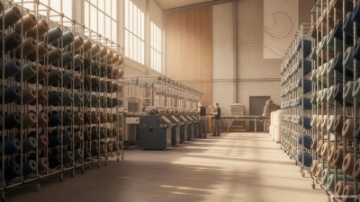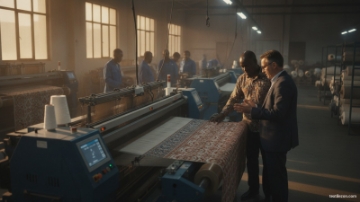
The European textile industry is experiencing its worst sustained decline in modern history. EURATEX, the European Apparel and Textile Confederation, has published its 2026 Economic Update confirming that 2025 marked the third consecutive year of negative results in production, turnover, and employment.
Factory closures continue at a weekly pace across Europe. Each closure represents lost jobs, disrupted communities, and eroded industrial capabilities that took decades to establish.
Root Causes Behind the Industry's Decline
EURATEX identifies five structural factors driving the sustained deterioration of the European textile sector:
- High energy costs: Structurally elevated energy prices disadvantage European producers against global competitors.
- Weak consumer demand: Subdued household spending continues to suppress revenue across the clothing and textile value chain.
- Asian import pressure: Rising volumes of low-cost imports are undercutting European manufacturers on price.
- Unfair platform competition: Direct-to-consumer online platforms bypass standard customs and quality controls.
- Regulatory burden: An expanding compliance environment raises operational costs for European producers.
These pressures compound each other, accelerating factory closures and pushing production out of Europe at an increasing rate.
Strategic Value the EU Cannot Afford to Lose
Textiles are far more than a consumer goods category. The European textile sector supplies critical value chains across healthcare, defence, mobility, construction, and agriculture. It also anchors Europe's circular economy goals through industrial reuse and recycling infrastructure.
Losing this sector would increase import dependency, raise Europe's carbon footprint, and undermine manufacturing sovereignty. EURATEX President Mario Jorge Machado warned: "If Europe is serious about maintaining its manufacturing base, it must act faster and more decisively. Every week, textile companies are closing. Production moves elsewhere, dependency increases, and the carbon footprint grows. That is the opposite of what Europe wants to achieve."
EURATEX Calls for Concrete Action Before 2026 Ends
The EU is developing long-term policy tools — including the Industrial Accelerator Act, Union Customs Code reform, and the Energy Union framework. EURATEX warns, however, that many companies cannot survive the wait for these measures to take effect.
The confederation is demanding immediate action from the European Commission and Member States before the end of 2026. Priority measures include:
- Reducing energy costs for industrial producers
- Simplifying the regulatory environment
- Strengthening market surveillance against unfair imports and platforms
- Restoring a genuine level playing field for European manufacturers
B2B professionals monitoring the European textile industry can access the latest sector developments through the Info Center on Textilezon.com.
Frequently Asked Questions
What did the EURATEX 2026 Economic Update reveal?
The update confirmed that 2025 was the third consecutive year of negative results for the European textile and clothing sectors. Production, turnover, and employment all declined, reflecting a deepening erosion of European competitiveness.
What is causing the decline in Europe's textile industry?
EURATEX identifies five main causes: structurally high energy costs, weak consumer demand, growing import pressure from Asia, unfair competition from online platforms, and an increasingly heavy regulatory burden. These factors are compounding to accelerate factory closures across the continent.
What is EURATEX asking EU policymakers to do?
EURATEX is urging the European Commission and Member States to reduce energy costs, simplify regulations, strengthen market surveillance, and restore fair competition for European manufacturers — all before the end of 2026.
The European textile sector remains a pillar of strategic and economic value for the continent. Without urgent and decisive policy action, the pace of closures will intensify, deepening Europe's industrial vulnerabilities and undermining its sustainability commitments for years to come.