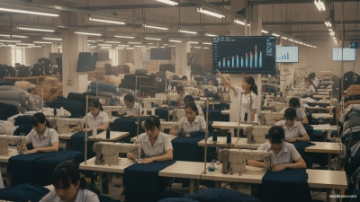
The US Customs and Border Protection (CBP) has moved to block garment imports from Jordanian factories over alleged forced labour practices. NGOs and trade data have identified the affected suppliers as manufacturers for prominent global fashion brands, raising urgent questions about supply chain compliance across the textile industry.
CBP Enforcement Action Targets Jordan Factories
CBP has issued enforcement measures against specific Jordanian garment facilities based on documented evidence of forced labour indicators. The agency operates under the Tariff Act of 1930, which prohibits the importation of goods produced with forced or prison labour. Such actions typically result in Withhold Release Orders (WROs), directing US ports of entry to detain shipments from named entities.
Jordan has long benefited from duty-free access to the US market through its Qualifying Industrial Zones (QIZs) and the US–Jordan Free Trade Agreement. This preferential market access makes CBP's enforcement decision particularly significant for Jordanian exporters and their global brand partners.
NGOs and Trade Data Expose the Supply Chain Links
Civil society organisations played a pivotal role in surfacing the alleged forced labour violations at the targeted facilities. NGO-led field investigations documented labour rights concerns and provided evidence to authorities. Trade flow data further corroborated direct supply chain connections between the blocked Jordanian factories and well-known international brands.
Jordan's garment industry employs a significant share of migrant workers — a demographic that international labour monitors have flagged as vulnerable to exploitation. This data-driven enforcement model, combining NGO intelligence with customs analytics, is emerging as the standard approach for identifying forced labour risks in global textile supply chains.
The current CBP action suggests that longstanding labour rights concerns in Jordan's manufacturing sector have now reached an enforcement threshold. Brands and sourcing teams active in the region must reassess their supplier risk profiles accordingly.
Implications for Global Brands and Supply Chain Compliance
Brands linked to the blocked Jordanian factories face potential shipment delays, customs detention, and reputational exposure. To recover detained goods, importers must demonstrate that production did not involve forced labour — a process requiring detailed documentation and active supplier engagement. Failure to provide sufficient evidence risks permanent seizure of shipments.
This enforcement action sends a clear signal to the global fashion and textile industry. Sourcing from regions with known labour risks demands robust, ongoing supplier audits and a proactive compliance posture. Reactive due diligence is no longer sufficient to protect brands from legal and commercial risk.
CBP's heightened focus on forced labour enforcement reflects broader legislative momentum, including the Uyghur Forced Labor Prevention Act (UFLPA), which established a rebuttable presumption framework now being applied more widely across sourcing regions. Textile businesses sourcing internationally must treat labour compliance as a core operational function.
Frequently Asked Questions
What is a CBP Withhold Release Order (WRO)?
A Withhold Release Order is a directive from US Customs and Border Protection requiring ports of entry to detain merchandise suspected of being produced with forced labour. Importers must provide evidence of compliant production to secure the release of detained shipments.
How do NGOs influence CBP forced labour enforcement?
NGOs conduct field investigations and publish reports documenting labour violations in manufacturing regions. CBP reviews this evidence alongside trade data and customs intelligence when determining whether to issue enforcement actions such as WROs.
What should brands do if their Jordanian suppliers are affected?
Brands should immediately engage affected suppliers to gather production documentation and labour compliance records. Legal counsel familiar with CBP import enforcement procedures should be involved promptly. Transparent stakeholder communication is also essential to manage reputational risk.
CBP's action against Jordanian garment factories marks a significant escalation in forced labour enforcement across global supply chains. For textile businesses sourcing internationally, compliance investment is now a direct prerequisite for uninterrupted market access and sustained brand credibility.