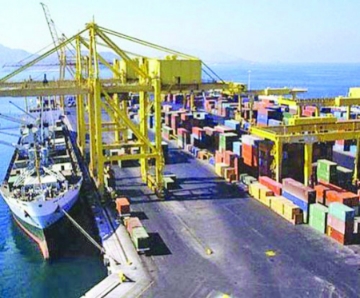
U.S. import tariffs and surging fuel costs are compelling retailers to accelerate cargo shipments into American ports ahead of anticipated cost increases. The latest Global Port Tracker report, produced by the National Retail Federation (NRF) and Hackett Associates, documents a pronounced pre-emptive import surge in June 2026. For textile manufacturers and B2B procurement professionals, understanding this shifting trade landscape is essential for strategic planning.
The Front-Loading Effect: Why Retailers Are Rushing Imports
Retailers are deliberately pulling forward cargo orders ahead of expected cost hikes. NRF Vice President for Supply Chain and Customs Policy Jonathan Gold confirmed that higher import tariffs and fuel prices anticipated from August onward are the primary motivators.
"We expect to see a year-over-year increase this month that's partly driven by retailers bringing in merchandise early because of higher costs from tariffs or fuel prices that could come starting in August," Gold stated. The current surge is further amplified by a distorted baseline: June 2025 volumes fell sharply after President Donald Trump announced "Liberation Day" tariffs two months prior.
Hackett Associates founder Ben Hackett confirmed that importers now face compounding pressures — rising import tariffs and higher shipping costs as carriers pass along escalating fuel expenses. This dual burden is accelerating front-loading activity across multiple product categories, including textiles and apparel.
Month-by-Month U.S. Port Volume Forecasts: 2026
The Global Port Tracker provides detailed monthly forecasts for all major U.S. gateway ports. The data below reflects both the short-term import surge and the volume correction expected in the second half of 2026.
| Month | Forecast Volume (TEU) | Year-Over-Year Change |
|---|---|---|
| April 2026 (actual) | 2.05 million | -7.3% |
| May 2026 (projected) | 2.14 million | +9.7% |
| June 2026 (forecast) | 2.25 million | +14.3% |
| July 2026 (forecast) | 2.19 million | -8.4% |
| August 2026 (forecast) | 2.12 million | -8.6% |
| September 2026 (forecast) | 2.06 million | -2.2% |
| October 2026 (forecast) | 2.08 million | +0.1% |
Combined, the first half of 2026 is projected at 12.6 million TEU, up 0.6% from H1 2025. This modest gain is driven almost entirely by the May–June pre-tariff surge.
"The current import surge will likely last into July, with an early peak season that resembles the more recent pattern of raised volume rather than a sharp peak. After this, we expect a weakening in import volume as consumer uncertainty remains high and the impact of increasing inflation takes its toll," Hackett stated.
Three Forces Driving the 2026 Import Acceleration
The pre-emptive import push stems from three converging factors that are simultaneously raising costs and compressing planning windows for supply chain operators.
Import Tariff Uncertainty After the Supreme Court Ruling
The Supreme Court ruled that Trump's 2025 tariff structure was illegal, voiding the original framework. The administration then moved to impose replacement import tariffs, extending trade policy uncertainty into mid-2026. This legal instability is a key catalyst for front-loading as companies attempt to bring goods in before new tariff structures take effect.
Fuel Costs Passed On by Shipping Carriers
Shipping carriers are directly passing sharply higher fuel costs to importers through surcharges and elevated freight rates. Ben Hackett specifically noted that carriers are applying rising fuel costs as an additional layer of import expense. This cost escalation compresses freight budgets and increases the urgency of pre-emptive shipment timing.
Iran Conflict and Persistent Inflationary Pressure
The ongoing conflict in Iran is sustaining elevated energy prices and generating broader economic uncertainty. Jonathan Gold identified this as a primary reason imports are expected to soften in H2 2026, as rising inflation erodes consumer confidence and dampens retail demand. Geopolitical risk continues to add cost complexity to global trade flows.
April 2026 Port Performance: The Actual Data
U.S. ports covered by the Global Port Tracker handled 2.05 million Twenty-Foot Equivalent Units (TEU) in April 2026. That figure was down 5.1% from March and down 7.3% year over year. The Port of New York and New Jersey had not yet reported its April numbers at the time of publication.
A TEU (Twenty-Foot Equivalent Unit) represents one 20-foot shipping container or its equivalent — the universal standard for measuring port cargo throughput globally. The April decline confirms that systematic front-loading gained momentum only from May onward.
U.S. Ports Covered and Textile Trade Relevance
The Global Port Tracker monitors twelve major U.S. ports across three coastlines, which together handle the vast majority of American textile, apparel, and home goods imports:
- West Coast: Los Angeles/Long Beach, Oakland, Seattle, Tacoma
- East Coast: New York/New Jersey, Port of Virginia, Charleston, Savannah, Port Everglades, Miami, Jacksonville
- Gulf Coast: Houston
For textile importers sourcing fabric, yarn, or finished garments from Asia, the West Coast ports are the primary entry points. East Coast ports serve importers closer to major retail distribution hubs on the Eastern Seaboard.
Monitoring volume trends at these gateways enables more precise logistics planning and import tariff cost modeling. Textile trade professionals can follow these and other supply chain developments through the market information section at textilezon.com.
Frequently Asked Questions
What is the Global Port Tracker and who publishes it?
The Global Port Tracker is a monthly trade report produced by Hackett Associates for the National Retail Federation (NRF). It provides historical cargo volume data and multi-month import forecasts for major U.S. ports on the West Coast, East Coast, and Gulf Coast.
Why are U.S. import volumes forecast to spike in June 2026?
June 2026 volumes are forecast at 2.25 million TEU, up 14.3% year over year. Retailers are front-loading shipments to beat rising import tariffs and fuel costs expected from August onward. The favorable comparison also reflects the sharp drop in June 2025 caused by "Liberation Day" tariff announcements.
When will U.S. port volumes return to normal after the June surge?
The Global Port Tracker projects a gradual decline from July 2026: July at 2.19 million TEU (-8.4%), August at 2.12 million TEU (-8.6%), and September at 2.06 million TEU (-2.2%). Volume stabilizes near flat by October, forecast at 2.08 million TEU (+0.1%).
How does the Supreme Court tariff ruling affect textile importers?
The Supreme Court struck down Trump's 2025 tariff structure, prompting the administration to impose replacement import tariffs. This creates unpredictable landed cost exposure for textile importers sourcing overseas. Companies are responding by front-loading cargo to lock in costs under the current framework before new tariffs take effect.
What steps should textile importers take in response to these market conditions?
Textile importers should consider accelerating Q3 sourcing orders to secure current freight rates before import tariff increases materialize. Building safety stock near major gateway ports and tracking monthly Global Port Tracker data provides a practical framework for managing trade cost risk through the rest of 2026.
Key Takeaways for Textile and Apparel Trade Professionals:
- U.S. port import volumes are surging in June 2026 as retailers front-load cargo ahead of higher import tariffs and fuel costs.
- June 2026 is forecast at 2.25 million TEU (+14.3% year over year), with volumes declining from July through September.
- The Supreme Court ruling on Trump's 2025 tariff structure has added legal uncertainty, accelerating pre-emptive import activity industry-wide.
- First-half 2026 imports are projected at 12.6 million TEU, up just 0.6% from H1 2025 — reflecting underlying trade caution beneath the surface surge.
- Textile procurement and logistics teams that align shipment timing with monthly port volume data will be best positioned to manage import cost exposure.
The current import tariff environment marks a critical inflection point for global textile supply chains. Firms that track trade data proactively and align sourcing calendars with port volume forecasts will preserve margin and maintain supply resilience through 2026 and beyond.