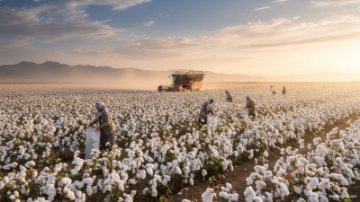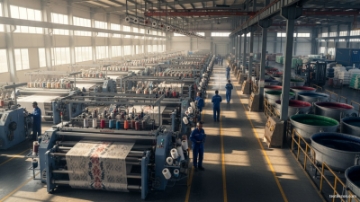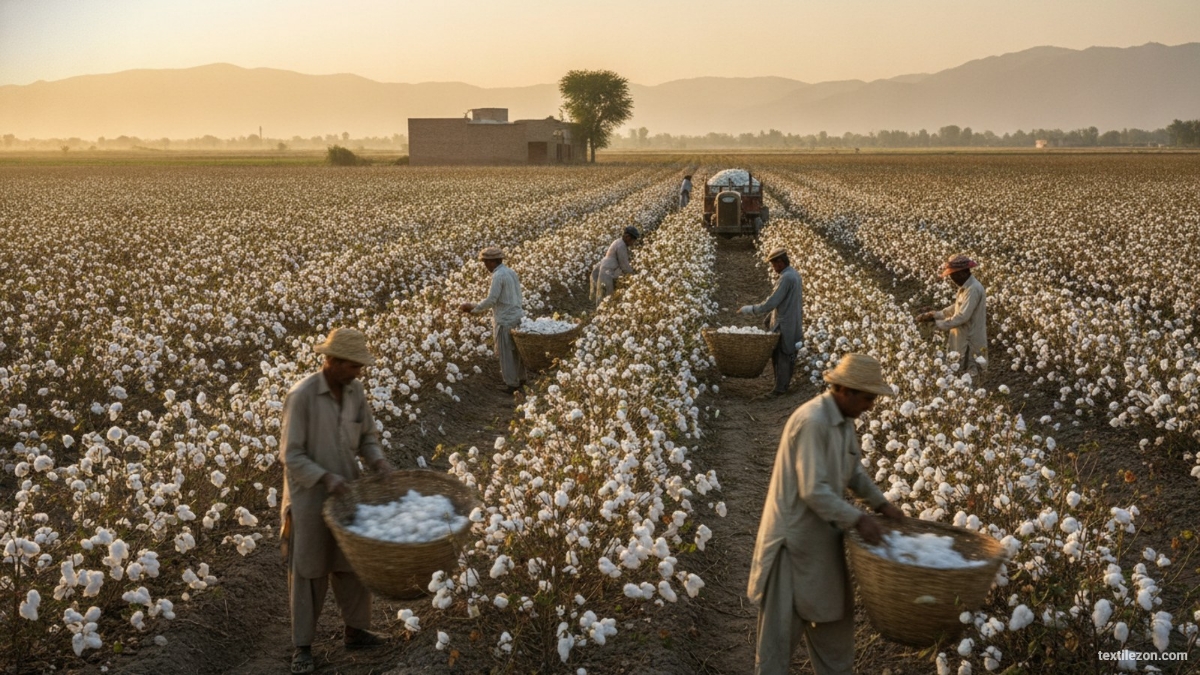
Pakistan's cotton production targets for the upcoming season face growing uncertainty, with the Cotton Crop Assessment Committee's ambitious goal of 10.8 million bales drawing skepticism from agricultural experts and industry stakeholders. Reduced sowing areas, extreme weather events, and persistent pest infestations are converging to challenge Pakistan's cotton sector. For textile manufacturers and importers worldwide, these developments represent a tangible raw material supply risk worth monitoring. Follow the latest textile news on textilezon.com's Info Center for ongoing coverage.
Committee Sets 10.8 Million Bale Benchmark
The Cotton Crop Assessment Committee has deliberated on a production target of 10.8 million bales for the upcoming season. This figure reflects earlier optimism about Pakistan's agricultural capacity, but current field reports diverge sharply from that projection. Agricultural experts and industry stakeholders are openly questioning whether this benchmark is achievable under present conditions.
The cotton crop serves as a backbone of Pakistan's national economy, underpinning the country's massive textile export sector and supporting millions of farming households. Any significant deviation from production targets carries economic consequences well beyond the farm gate.
Sowing Area Declines Across Punjab and Sindh
A decline in sowing area across Punjab and Sindh — Pakistan's two primary cotton-producing provinces — is the most pressing structural concern this season. High input costs for seeds, fertilizers, and crop protection chemicals have made cotton farming less financially attractive for smallholder growers. Fluctuating market prices have further reduced the incentive to expand cotton acreage compared to previous years.
As cultivation area contracts, the textile industry faces a tighter domestic supply position. Any shortfall in local production forces manufacturers to source cotton through expensive imports, raising costs across the entire value chain. The Cotton Crop Assessment Committee is tracking these acreage shifts as the central variable in its seasonal output forecast.
Climate Stress and Pest Pressure Weigh on Yields
Environmental challenges are compounding the acreage problem this season. Intense heatwaves and erratic rainfall disrupted crop development during critical growth phases, directly suppressing per-hectare yields. These climate-related pressures are becoming more frequent, making reliable production forecasting increasingly difficult for growers and analysts alike.
Pest infestations pose an additional and persistent threat. Whitefly and pink bollworm continue to damage plants across Pakistan's cotton belt, eroding yield potential in already stressed fields. Agricultural experts are calling for stronger and better-coordinated pest management interventions to protect the standing crop. Without meaningful field-level support or a favorable late-season weather window, the gap between actual output and the 10.8 million bale target is set to widen considerably.
The Cotton Crop Assessment Committee is expected to revise its seasonal estimates as the harvest progresses. The textile industry remains cautiously hopeful for a late recovery, but the current trajectory keeps cotton production targets under sustained pressure.
Frequently Asked Questions
What is the Cotton Crop Assessment Committee's target for this season?
The Committee set a production benchmark of 10.8 million bales for the upcoming season. Agricultural experts and industry stakeholders are increasingly skeptical this figure is achievable given reduced sowing areas, adverse weather, and active pest infestations across major growing provinces.
Why is cotton sowing area declining in Pakistan?
High input costs and volatile market prices have made cotton cultivation less economically viable for farmers in Punjab and Sindh. These financial pressures are causing many growers to reduce cotton acreage or redirect land toward alternative, more profitable crops.
What does a cotton shortfall mean for the textile industry?
A domestic production gap forces textile manufacturers to rely on costly imported cotton to meet industrial demand. This raises production costs, compresses margins, and reduces export competitiveness — factors that B2B procurement professionals and global textile buyers should factor into their sourcing and pricing strategies now.
Pakistan's cotton production sector faces a convergence of structural, climatic, and pest-related pressures that put the 10.8 million bale target in serious doubt. Revised estimates from the Cotton Crop Assessment Committee, expected as the season advances, will be closely watched by textile manufacturers, commodity traders, and policymakers worldwide. Businesses with exposure to Pakistani cotton supply chains must treat supply risk management and diversified sourcing as immediate operational priorities.