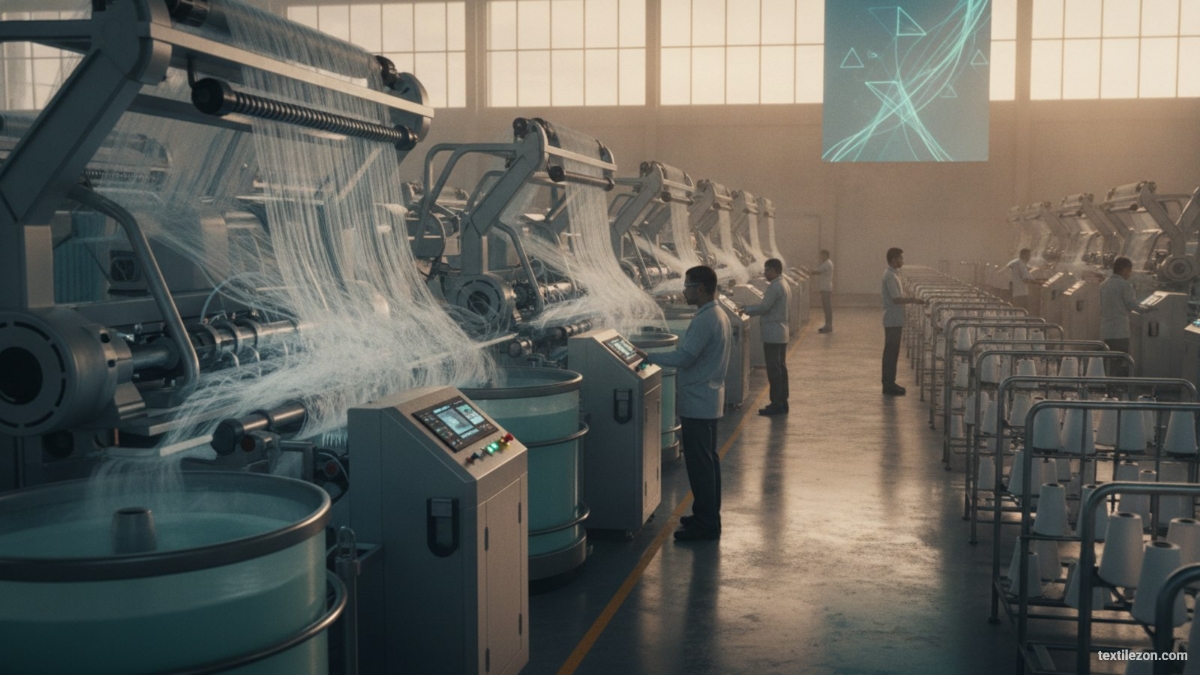
The global textile industry is witnessing a pivotal shift toward eco-friendly, high-performance materials. Lyocell fiber has emerged as one of the most important sustainable cellulosic alternatives available to manufacturers today. Grasim Industries Limited, the flagship company of the Aditya Birla Group, has committed more than $300 million to expand lyocell fiber production at its Harihar, Karnataka facility.
This Phase 2 investment of ₹3,094 crore signals more than a manufacturing expansion. It marks India's strategic ambition to lead the global cellulosic fiber market and deliver sustainable fiber solutions at unprecedented scale.
Table of Contents
- What Is Lyocell Fiber?
- Grasim's Phase 2 Investment: Key Details
- Production Timeline and Capacity Milestones
- Lyocell in Sustainable Textile Supply Chains
- Grasim's Specialty Fiber Portfolio Strategy
- India's Emerging Role in Global Lyocell Production
- Frequently Asked Questions
- Key Takeaways
What Is Lyocell Fiber?
Lyocell is a man-made cellulosic fiber produced from dissolved wood pulp, typically sourced from sustainably managed eucalyptus or beech forests. Unlike conventional synthetics such as polyester, lyocell is biodegradable and manufactured through a closed-loop solvent process that recovers and recycles more than 99% of the processing solvent.
The fiber produces smooth, strong, and moisture-absorbing fabric that performs across a wide range of textile applications — from premium apparel to home furnishings. Its softness rivals silk, its wet strength surpasses cotton, and its drape quality attracts both fashion and functional textile markets.
Lyocell vs. Other Cellulosic Fibers
Lyocell occupies a premium position within the cellulosic fiber family alongside viscose (rayon) and modal. All three derive from wood pulp, but their production processes differ significantly in environmental impact. Lyocell's closed-loop solvent system makes it far less water-intensive and chemically harmful than conventional viscose manufacturing.
Modal fiber, another offering in Grasim's portfolio under the Birla Cellulose brand, shares similar softness characteristics but undergoes a different manufacturing route. Lyocell's superior wet strength and lower environmental footprint position it as the next evolution in sustainable cellulosic fiber technology.
Grasim's Phase 2 Investment: Key Details
Grasim Industries has announced Phase 2 of its lyocell fiber expansion at the Harihar plant in Karnataka. The investment totals ₹3,094 crore — more than $300 million USD. This builds directly on the Phase 1 plant currently under construction at the same site, expected to commission by mid-2027.
Phase 2 will add two production lines, each with a capacity of 150 tons per day. Together, they will contribute 300 tons per day of additional lyocell fiber output when fully operational.
Investment Highlights at a Glance
- Total Phase 2 investment: ₹3,094 crore (over $300 million USD)
- Location: Harihar, Karnataka, India
- New production lines: Two lines at 150 tons/day each
- Combined daily capacity addition: 300 tons per day
- Post-expansion annual capacity: Exceeds 1 million tons
Kumar Mangalam Birla, chairman of the Aditya Birla Group, emphasized India's long-term industrial potential:
"The Aditya Birla Group has always demonstrated the willingness to invest ahead of the curve in sectors that will define India's future competitiveness and economic resilience. It is a vote of confidence in the scale and promise of the Indian market, aligns closely with the aspirations of Make in India, and will help position India as a more competitive and resilient force in the global textile industry."
Production Timeline and Capacity Milestones
Grasim has outlined a structured, phased approach to building world-scale lyocell fiber capacity. The Phase 1 plant at Harihar commissions by mid-2027, establishing initial production. Phase 2 follows with the first additional line in 2028 and the second in 2030.
This timeline delivers a clear path to surpassing 1 million tons of annual lyocell capacity by 2030. Global lyocell demand continues to grow as brands and retailers intensify their sustainable sourcing commitments.
Phased Commissioning Schedule
| Phase | Production Line | Daily Capacity | Target Commissioning |
|---|---|---|---|
| Phase 1 | Initial Plant | — | Mid-2027 |
| Phase 2 | Line 1 | 150 tons/day | 2028 |
| Phase 2 | Line 2 | 150 tons/day | 2030 |
The staged rollout manages capital risk while matching output growth to market demand. Each 150-ton-per-day line represents a substantial production unit by global cellulosic fiber standards.
Lyocell in Sustainable Textile Supply Chains
Demand for sustainable textile materials continues to accelerate worldwide. Retailers in Europe and North America face growing regulatory and consumer pressure to reduce the environmental footprint of their supply chains. Lyocell fiber directly addresses these demands through its biodegradability, closed-loop production, and certified sustainable wood sourcing.
Grasim's Birla Cellulose brand already supplies lyocell and modal fibers to leading global fashion and home textile brands. The Phase 2 expansion ensures Birla Cellulose can scale supply to meet orders from brands aligned with science-based sustainability targets.
Key Application Sectors for Lyocell Fiber
- Apparel: Premium casual wear, activewear, intimate apparel, and denim blends
- Home textiles: Bedding, towels, and upholstery fabrics requiring softness and durability
- Technical textiles: Nonwovens for medical and hygiene applications
- Eco-friendly home furnishings: Curtains, cushion covers, and decorative fabrics with verified sustainability credentials
Vadiraj Kulkarni, business head of Grasim Pulp & Fibre, highlighted the fiber's dual value proposition:
"By expanding Lyocell capacity, we are accelerating the shift towards high-performance fibers with a lower environmental impact. Lyocell enhances our product mix, supports premium applications, and aligns with our focus on delivering differentiated, sustainable solutions to global markets."
Grasim's Specialty Fiber Portfolio Strategy
Grasim Industries is executing a deliberate pivot toward specialty fibers as a proportion of total production. The company targets a 35% specialty portfolio share by 2030. This specialty mix includes lyocell, modal, dope-dyed fibers, and recycled cellulosic fibers.
This strategic direction reflects broader industry economics. Standard viscose fiber faces margin compression from Asian commodity producers, while specialty fibers command premium pricing and attract long-term supply agreements with sustainability-focused global brands.
Grasim's Specialty Fiber Roadmap to 2030
- Lyocell fiber: Flagship sustainable cellulosic fiber and primary capacity growth driver
- Modal: Soft-feel fiber for premium apparel and intimate wear markets
- Dope-dyed fibers: Color embedded during fiber formation, reducing downstream dyeing water consumption
- Recycled fibers: Closed-loop solutions aligned with circular economy principles and brand commitments
Reaching a 35% specialty share by 2030 demands consistent and substantial capital investment. The ₹3,094 crore Phase 2 commitment confirms that Grasim is allocating resources at the pace required to meet this strategic target.
India's Emerging Role in Global Lyocell Production
India's textile sector has historically been strong in cotton and polyester, but cellulosic specialty fibers represent a newer, higher-value growth frontier. Grasim's investment in Harihar, Karnataka is building world-scale lyocell fiber capacity on Indian soil for the first time.
Surpassing 1 million tons of annual lyocell capacity would position Grasim as one of the largest lyocell producers globally. This directly supports India's Make in India ambitions — encouraging domestic manufacturing that reduces import dependence and generates high-value industrial employment.
For B2B textile buyers and procurement professionals sourcing sustainable fibers, Birla Cellulose's expanding capacity signals a more competitive and reliable Asian supply option. Explore related fiber and feedstock insights through the articles section on textilezon.com.
Frequently Asked Questions
What is lyocell fiber made from?
Lyocell fiber is produced from dissolved wood pulp, typically sourced from sustainably certified eucalyptus or beech forests. Its manufacturing uses a closed-loop solvent system that recovers more than 99% of processing chemicals. This makes lyocell one of the most environmentally responsible man-made fibers in commercial production today.
How much is Grasim investing in lyocell expansion?
Grasim Industries is committing ₹3,094 crore — over $300 million USD — to Phase 2 lyocell fiber expansion at its Harihar, Karnataka facility. This follows the Phase 1 plant already under active construction at the same site.
When will Grasim's new lyocell production lines come online?
The Phase 1 plant targets commissioning by mid-2027. The first Phase 2 line at 150 tons per day is scheduled for 2028, and the second Phase 2 line at 150 tons per day targets 2030. Total annual capacity will exceed 1 million tons upon full completion.
What are the main applications of lyocell fiber?
Lyocell serves a broad range of markets including premium apparel, intimate wear, activewear, denim blends, bedding, towels, and medical nonwovens. Its combination of softness, wet strength, moisture management, and biodegradability makes it suitable for both fashion and technical textile applications.
How does lyocell fit into Grasim's long-term business strategy?
Lyocell is the primary growth driver in Grasim's specialty fiber strategy. The company targets a 35% specialty portfolio share by 2030, combining lyocell with modal, dope-dyed, and recycled fibers. This positions Grasim to capture premium pricing and long-term brand contracts in the sustainability-driven global textile market.
Key Takeaways
- Grasim Industries is investing ₹3,094 crore (over $300 million) in Phase 2 lyocell fiber expansion at Harihar, Karnataka.
- Two new 150-ton/day production lines will commission in 2028 and 2030, adding 300 tons per day of total capacity.
- Total annual lyocell capacity will exceed 1 million tons, placing Grasim among the world's largest lyocell producers.
- Lyocell's closed-loop production, biodegradability, and premium performance drive strong demand from sustainability-focused global brands.
- Grasim targets a 35% specialty fiber portfolio share by 2030, with lyocell as the core growth engine.
Grasim's phased lyocell investment establishes India as a world-scale cellulosic fiber producer and reinforces the global supply of sustainable textile materials. For textile manufacturers and B2B procurement professionals sourcing next-generation fibers, Birla Cellulose's expanding lyocell platform represents one of the most significant capacity developments in the cellulosic fiber industry this decade.