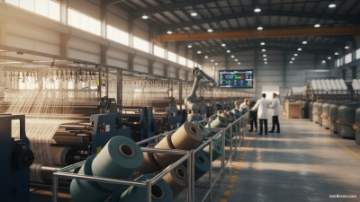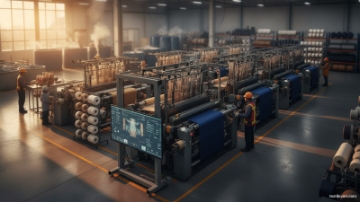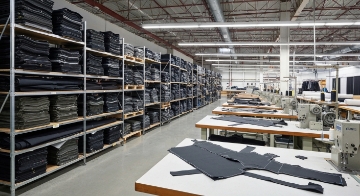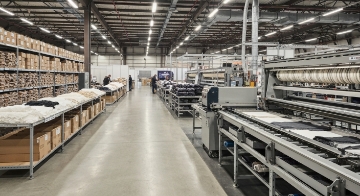
Falke, the German textile and clothing manufacturer, plans to produce 14 million pairs of socks at its Serbian facility in Leskovac this year. The company's ambitious sock production target reaffirms its long-term commitment to European manufacturing. Since entering Serbia in 2012, Falke has steadily built one of the region's most significant hosiery operations.
Falke's Serbian Manufacturing Presence
Falke established its Leskovac factory in 2012, committing 10 million euros to the facility's construction. Located in southern Serbia, Leskovac has a long industrial history in the textile sector, making it a natural fit for Falke's expansion. The plant quickly became a core component of the company's European manufacturing network.
Serbia has attracted European textile manufacturers due to its skilled labor force, competitive cost base, and strategic location. Falke's early investment placed the company at the forefront of nearshore manufacturing in the Balkans. The Leskovac facility continues to serve as a model for European-owned production in the region.
14 Million Pairs: Scale and Significance
A target of 14 million pairs of socks places Falke's Serbian plant among the higher-volume hosiery producers in Southeast Europe. Achieving this output requires robust supply chains, skilled technicians, and reliable machinery. For B2B sourcing professionals, production scale of this magnitude signals a supplier capable of meeting large-volume contracts.
High-volume factories like Leskovac support both branded and private-label hosiery supply across European retail and wholesale markets. Consistent annual production targets also indicate stable demand for Falke's products. Buyers evaluating hosiery suppliers can use such benchmarks to assess reliability and capacity planning.
European Nearshoring Trends in Textile Manufacturing
Falke's continued investment in Serbian production aligns with a broader European trend of nearshoring manufacturing to reduce supply chain risk. Following recent global disruptions, many brands have prioritized proximity and predictability over lowest-cost sourcing. Serbia has benefited directly from this strategic shift.
For professionals tracking textile news and sourcing developments, Falke's Leskovac operations exemplify stable, regionally anchored production. The plant's decade-plus operating history demonstrates the durability of European-Balkan manufacturing partnerships. Such facilities are increasingly valued for their responsiveness and shorter lead times compared to far-shore alternatives.
Frequently Asked Questions
Where is Falke's Serbian factory located?
Falke's Serbian production facility is based in Leskovac, a southern Serbian city with a strong textile manufacturing tradition. The factory opened in 2012 after a 10 million euro investment in its construction.
How many socks does Falke plan to produce in Serbia this year?
Falke has set a production target of 14 million pairs of socks for its Leskovac facility this year. This output places the plant among the leading hosiery producers in the Balkans region.
Why does Falke manufacture in Serbia?
Serbia offers Falke competitive labor costs, a skilled textile workforce, and close proximity to European markets. These factors support nearshore manufacturing strategies that reduce logistics complexity and lead times for European buyers.
Falke's Serbian operations demonstrate that long-term investment in European manufacturing delivers sustainable production capabilities for global B2B textile supply chains.