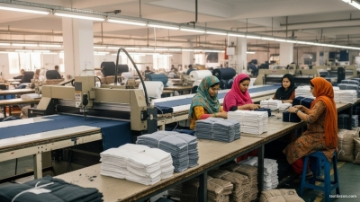
Fabric waste is one of the most costly and environmentally damaging challenges in apparel manufacturing. From cutting room floors to defective finished goods, material loss occurs at multiple stages of garment production. Artificial intelligence is equipping manufacturers with smarter tools to identify, reduce, and ultimately eliminate this waste. This article examines how AI technologies are reshaping production efficiency across the apparel supply chain.
Table of Contents
- The Scale of Fabric Waste in Apparel Manufacturing
- AI-Powered Pattern Making and Marker Planning
- Demand Forecasting to Prevent Overproduction
- Computer Vision and Defect Detection
- Real-Time Production Monitoring with AI
- Sustainable Supply Chain Optimization
- Challenges of AI Adoption in Garment Factories
- Frequently Asked Questions
The Scale of Fabric Waste in Apparel Manufacturing
The apparel industry generates significant material waste at every stage of the production process. Fabric is lost during spreading and cutting, in rejected panels, and through overproduced inventory that never reaches a consumer. These losses directly impact profit margins, production costs, and environmental sustainability.
For B2B textile businesses, waste reduction is not just an environmental goal — it is a competitive necessity. Manufacturers who minimize material loss achieve lower cost-per-unit and improve their pricing position in global markets. AI-driven systems are proving to be among the most effective tools for achieving this goal.
Bangladesh's garment sector — where institutions such as the National Institute of Textile Engineering & Research (NITER) are advancing research on AI in production — represents a key case for AI adoption in a high-volume, margin-sensitive manufacturing environment.
AI-Powered Pattern Making and Marker Planning
Marker planning — the process of arranging pattern pieces on fabric before cutting — is one of the most critical points of waste generation in garment production. Traditional manual marker planning relies on the skill of the cutter and often leaves significant fabric unused between pattern pieces.
How AI Optimizes Marker Efficiency
AI-powered marker planning software analyzes thousands of pattern piece configurations in seconds. These systems use computational geometry and machine learning algorithms to find the most efficient arrangement on a given fabric width and length. The result is significantly higher fabric utilization compared to manual methods.
Advanced AI systems automatically account for fabric grain lines, pattern repeats, and directional constraints. This removes a major source of human error that leads to rejected panels and production reruns. Manufacturers gain consistent, repeatable marker quality without relying solely on operator expertise.
Integration with CAD Systems
Modern AI marker planning tools integrate directly with computer-aided design (CAD) systems used in pattern making. This seamless workflow eliminates manual data entry between design and cutting stages. The AI continuously learns from historical cutting data to improve its efficiency recommendations over time.
Demand Forecasting to Prevent Overproduction
Overproduction is a leading cause of fabric and finished goods waste in the apparel industry. Brands and manufacturers often produce more units than the market demands, resulting in unsold inventory that is discounted, stored, or destroyed. AI-driven demand forecasting addresses this problem at the source.
Machine learning models analyze sales history, seasonal trends, regional demand patterns, and market signals to generate accurate production forecasts. These forecasts help manufacturers align fabric procurement and cutting plans closely with actual demand. Reduced overproduction means less fabric ordered, less waste generated, and lower inventory carrying costs.
Dynamic Inventory and Procurement Management
AI systems can connect demand forecasting directly to inventory management and raw material procurement workflows. When a forecast adjustment is detected, the system can automatically trigger revised purchase orders or cutting instructions. This closed-loop approach minimizes the lag between market signal and production response — a key driver of waste in traditional supply chains.
Computer Vision and Defect Detection
Computer vision is transforming quality control in textile and apparel manufacturing. AI-powered cameras and sensors inspect fabric and finished panels at production speed, identifying defects that human inspectors might miss during high-volume runs. Early defect detection prevents flawed materials from entering subsequent production stages, reducing downstream waste.
Fabric Inspection Before Cutting
AI vision systems deployed at the fabric inspection stage scan incoming rolls for weaving defects, stains, holes, and color inconsistencies. The system flags defective zones on a digital map of the roll before it reaches the cutting room. Cutters can then avoid flagged areas when placing pattern markers, salvaging more usable fabric from imperfect rolls.
In-Process Panel Inspection
After cutting, AI systems inspect individual panels for dimensional accuracy and edge quality. Panels that do not meet specification are rejected before they consume additional labor in sewing operations. This prevents the creation of defective finished goods — a higher-value form of waste than raw fabric loss.
Real-Time Production Monitoring with AI
AI-powered production monitoring systems give factory managers live visibility into machine performance, operator output, and material consumption. These systems identify inefficiencies as they occur, enabling immediate corrective action rather than post-production analysis. IoT sensors on cutting, spreading, and sewing equipment feed continuous data into AI platforms for real-time insight.
The AI identifies patterns — such as a cutting machine consuming more fabric than expected on a specific style — and alerts supervisors immediately. This level of granular visibility was previously impossible without significant manual data collection effort. Rapid response to anomalies directly reduces material waste and production rework.
Predictive Maintenance to Reduce Material Loss
AI-driven predictive maintenance models monitor equipment data to forecast failures before they occur. A blunt cutting blade or misaligned spreading machine can cause significant fabric damage and rework. Predictive maintenance schedules service interventions before defects manifest on the cutting room floor, protecting fabric quality and production flow.
Sustainable Supply Chain Optimization
AI's role in waste reduction extends beyond the factory floor to the broader supply chain. By optimizing logistics, fabric sourcing, and production sequencing, AI helps manufacturers reduce the total material footprint of their operations. This matters increasingly as global buyers impose sustainability requirements on their supplier base.
AI platforms can evaluate the sustainability profile of different fabric suppliers, routing orders toward mills with lower waste rates or certified sustainable materials. They can also optimize shipment consolidation to reduce transportation inefficiency. B2B textile businesses seeking more technical industry insights will find in-depth resources across all textile categories on the textilezon.com articles section.
Challenges of AI Adoption in Garment Factories
Despite its clear benefits, AI adoption in apparel manufacturing faces significant barriers — particularly for small and medium-sized enterprises in developing markets. Understanding these challenges is essential for manufacturers planning an AI investment strategy.
Data Quality and Infrastructure Requirements
AI systems require large volumes of high-quality data to function effectively. Many garment factories, especially in emerging markets, still operate with paper-based records or fragmented digital systems. Building the data infrastructure to support AI — including connected machinery, structured data collection, and governance processes — represents a significant upfront investment.
Skills Gap and Change Management
Deploying AI in a production environment requires trained personnel who can configure, maintain, and interpret AI outputs. The skills gap in AI and data literacy remains a challenge across many textile-producing regions. Successful AI adoption requires technology investment alongside sustained workforce training and organizational change management.
Cost and Return on Investment
Enterprise AI platforms carry substantial licensing and implementation costs. Manufacturers must carefully evaluate return on investment against their specific production volumes and waste profiles. A phased implementation — starting with high-impact areas such as marker planning or defect detection — provides the fastest payback and builds organizational confidence for broader AI rollout.
Frequently Asked Questions
How does AI reduce fabric waste in cutting rooms?
AI marker planning software arranges pattern pieces on fabric in the most efficient configuration possible, maximizing the use of every centimeter of material. It evaluates thousands of layout options instantly and automatically applies constraints like grain lines and pattern direction. This consistently outperforms manual marker planning in fabric utilization.
Can AI help small garment manufacturers reduce waste?
Yes. Cloud-based AI tools and software-as-a-service platforms have lowered the entry barrier for smaller manufacturers. Many vendors offer modular solutions that allow SMEs to start with a single use case — such as marker optimization — and expand over time as ROI is demonstrated.
What types of fabric defects can AI detect?
AI computer vision systems detect a wide range of defects including weaving errors, holes, stains, color inconsistencies, broken yarns, and dimensional deviations. Detection accuracy improves as the system is trained on images specific to each fabric type and defect category used in a given factory.
How does AI demand forecasting reduce apparel waste?
AI forecasting models analyze historical sales, market trends, and demand signals to predict how many units of each style should be produced. This allows manufacturers to align production volumes with actual demand, reducing overproduction — a major source of finished goods waste in the apparel industry.
What investment is required to implement AI in a garment factory?
Investment requirements vary by factory size, existing digital infrastructure, and deployment scope. Costs typically include software licensing, hardware, data integration, and staff training. A phased approach starting with high-ROI applications like AI marker planning or automated defect detection helps manage investment risk while delivering measurable waste reduction benefits early.
Key Takeaways
- AI marker planning maximizes fabric utilization by optimizing pattern piece placement on each fabric roll.
- Demand forecasting with machine learning reduces overproduction, directly cutting fabric and finished goods waste.
- Computer vision systems detect defects early in the production process, preventing flawed materials from consuming additional labor and resources.
- Real-time production monitoring and predictive maintenance give factory managers immediate visibility and control over material efficiency.
- Sustainable supply chain optimization extends AI's waste reduction impact beyond the factory to sourcing and logistics.
- Successful AI adoption requires investment in data infrastructure, workforce skills, and a phased implementation strategy.
AI is reshaping how apparel manufacturers manage fabric waste, delivering measurable benefits in cost efficiency, sustainability, and product quality. B2B textile businesses that invest strategically in AI-powered production tools will be better positioned to meet global buyer demands and compete in an increasingly sustainability-conscious marketplace.