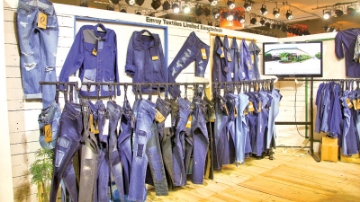
Demand forecasting has become one of the most critical capabilities for garment manufacturers and retailers navigating today's volatile markets. Traditional forecasting methods—relying on spreadsheets and historical sales averages—consistently fall short in an industry where trends shift seasonally, consumer preferences change rapidly, and supply chains span multiple continents. Artificial intelligence is now transforming how apparel businesses predict demand, manage inventory, and eliminate costly overstock and stockout scenarios.
- The Inventory Challenge in Garment Manufacturing
- What Is AI-Powered Demand Forecasting?
- Key AI and Machine Learning Techniques
- Essential Data Inputs for Accurate Forecasting
- Benefits for Garment Manufacturers and Retailers
- Implementation Roadmap
- Frequently Asked Questions
- Key Takeaways
The Inventory Challenge in Garment Manufacturing
Inventory management in the garment industry is uniquely complex. Unlike commodity goods, apparel is highly seasonal, size-dependent, and trend-sensitive. A single SKU may exist in dozens of size and color variants, each requiring its own demand projection.
Overstocking leads to markdowns, clearance sales, and wasted raw materials. Understocking results in missed revenue and damaged buyer relationships. Finding the right balance requires accurate, data-driven demand signals—something AI delivers far more reliably than manual methods.
The garment sector also faces mounting pressure from fast fashion cycles that compress lead times. Manufacturers must place fabric and trim orders weeks before the selling season begins, making accurate early-stage forecasting essential to profitability and operational efficiency.
What Is AI-Powered Demand Forecasting?
AI-powered demand forecasting uses machine learning algorithms to analyze large volumes of historical and real-time data to predict future product demand. Unlike rule-based systems, AI models learn continuously from patterns in data and improve their accuracy over time without manual recalibration.
These systems integrate inputs from multiple sources—point-of-sale records, e-commerce platforms, social media trend signals, weather data, and economic indicators. The result is a dynamic forecast that adjusts automatically as new information becomes available, giving planners a live view of demand trajectories.
For garment businesses, this capability means moving from reactive inventory management to proactive, forward-looking planning. AI models can generate forecasts at the SKU level, by region, retail channel, or customer segment, enabling much finer control over stock positioning across the entire supply chain.
Key AI and Machine Learning Techniques
Supervised Learning Algorithms
Supervised learning methods such as gradient boosting and random forest models are widely used in demand forecasting applications. These algorithms train on historical sales data and identify which variables—seasonality, promotions, price changes, and assortment breadth—most strongly influence future demand.
Regression-based models provide a strong baseline for steady, predictable product lines. For more volatile or fashion-forward SKUs, ensemble methods that combine multiple underlying models typically deliver superior forecast accuracy and greater resilience to demand shocks.
Deep Learning and Neural Networks
Recurrent neural networks (RNNs) and Long Short-Term Memory (LSTM) networks are particularly effective at capturing temporal patterns in time-series data. They excel at recognizing seasonal demand cycles and multi-year trend structures embedded in apparel sales histories.
Transformer-based architectures—originally developed for natural language processing—are increasingly applied to demand forecasting due to their ability to process complex, multi-dimensional input sequences in parallel. These models can simultaneously evaluate dozens of demand-influencing signals with high computational efficiency.
Probabilistic Forecasting
Modern AI forecasting moves beyond single-point predictions. Probabilistic forecasting generates a range of possible demand outcomes with associated confidence intervals, giving inventory planners a clearer picture of risk exposure. This approach enables more intelligent safety stock calculations and reduces both overstock and stockout risk.
Essential Data Inputs for Accurate Forecasting
The accuracy of any AI forecasting model depends directly on the quality and breadth of its data inputs. For garment inventory applications, the following data sources are critical:
- Historical sales data: SKU-level transaction records covering multiple selling seasons
- Promotional calendars: Planned markdowns, marketing campaigns, and seasonal events
- Real-time inventory levels: Current stock positions across all warehouses and retail locations
- Trend signals: Search volume data, social media engagement metrics, and runway reports
- Macroeconomic indicators: Consumer confidence indices and disposable income trends by market
- Weather and climate data: Especially relevant for seasonal categories such as outerwear and swimwear
- Supply chain lead times: Fabric sourcing, production, and inbound shipping timelines by supplier
Data quality is as important as data volume. Incomplete or inconsistent records introduce noise that degrades model performance. Before deploying AI forecasting, garment businesses should audit their data pipelines, standardize input formats, and establish clear data governance standards across all connected systems.
Benefits for Garment Manufacturers and Retailers
AI-powered demand forecasting delivers measurable business value across multiple dimensions of garment operations. The cumulative impact becomes more significant as models accumulate richer training data over successive seasons.
- Reduced inventory holding costs: Leaner stock positions minimize warehouse expenses and free up working capital
- Lower markdown rates: Better demand alignment reduces end-of-season clearance pressure and margin erosion
- Improved fill rates: Accurate forecasts ensure top-selling SKUs remain available during peak demand windows
- Faster trend response: Real-time model updates enable rapid reordering when breakout styles emerge
- Optimized raw material procurement: Fabric and trim orders align more precisely with actual production requirements
- Stronger supplier relationships: Consistent, data-backed purchase orders improve supplier planning and negotiation leverage
Early adopters in the garment industry gain a compounding competitive advantage as their AI models mature. Each new season of sales data makes forecasts progressively more accurate, widening the performance gap versus competitors still relying on manual planning methods.
Implementation Roadmap for Garment Businesses
Deploying AI demand forecasting in a garment business requires structured planning. A phased approach reduces implementation risk and accelerates time to measurable value.
Phase 1: Data Readiness Assessment
Begin by evaluating existing data infrastructure. Identify gaps in historical sales records, resolve duplicate or missing entries, and establish consistent data governance standards across ERP and warehouse management systems. Without clean, structured data, even the most sophisticated AI model will underperform against expectations.
Phase 2: Pilot Deployment
Select a defined product category or sales channel for the initial pilot program. Test AI-generated forecasts against actual demand outcomes over two to three selling seasons. Compare results against the existing forecasting baseline to quantify accuracy improvements and identify model weaknesses.
Phase 3: Full-Scale Rollout
Once the pilot validates model performance, expand deployment across all product lines and geographies. Integrate AI forecasting outputs directly into enterprise resource planning (ERP) and inventory management systems to enable automated replenishment signals and purchase order generation.
Phase 4: Continuous Learning and Optimization
AI models require ongoing monitoring and periodic retraining as market conditions evolve. Establish a regular model review cadence—typically quarterly—to retrain on updated data, assess forecast accuracy KPIs, and incorporate new demand-influencing variables as they emerge. The garment industry's pace of change demands adaptive AI systems, not static ones.
Frequently Asked Questions
What types of garment businesses benefit most from AI demand forecasting?
Businesses managing large, diverse SKU catalogs—including fast fashion retailers, multi-category apparel brands, and large-scale manufacturers—gain the greatest benefit. The more complex the inventory structure, the more value AI delivers compared to manual or spreadsheet-based planning approaches.
How much historical data is needed to train an effective AI forecasting model?
Most AI models require a minimum of two to three years of daily or weekly sales data to capture seasonal demand patterns reliably. More data generally improves accuracy, particularly for products with strong seasonality or intermittent demand spikes that occur only once or twice per year.
Can small and mid-sized garment manufacturers afford AI demand forecasting?
Yes. Cloud-based forecasting platforms have made AI accessible to businesses of all sizes without requiring large upfront infrastructure investments. Many solutions offer modular pricing based on SKU count or monthly data volume, making enterprise-grade forecasting achievable for smaller manufacturers and exporters.
How does AI handle new product launches with no prior sales history?
For new SKUs, AI models use cold-start techniques such as attribute-based forecasting, drawing on demand patterns of existing products that share characteristics like fabric type, color family, silhouette, or price tier. This approach generates a useful initial forecast even when no direct sales history exists for the new item.
What distinguishes AI forecasting from traditional statistical methods like ARIMA?
Traditional statistical methods rely on predefined mathematical formulas applied to historical demand data in isolation. AI models learn non-linear relationships across many variables simultaneously—including external signals like weather and social trends—and adapt automatically as market dynamics shift, making them significantly more accurate for the complex, multi-factor demand environment of the apparel industry.
Key Takeaways
AI-powered demand forecasting represents a fundamental shift in how garment businesses plan inventory and coordinate supply chains. The technology moves apparel planning from reactive guesswork to proactive, data-driven decision-making at every level of the organization.
- Demand forecasting powered by AI analyzes multiple data streams to predict garment inventory needs at the SKU level with precision that manual methods cannot match
- Core techniques include gradient boosting, LSTM neural networks, and probabilistic forecasting models that quantify demand uncertainty
- Clean, comprehensive, multi-year sales data is the non-negotiable foundation of any successful AI forecasting deployment
- Key operational benefits include lower markdown rates, reduced holding costs, improved fill rates, and faster response to emerging fashion trends
- A phased implementation—beginning with a single-category pilot—minimizes risk and builds organizational confidence before full-scale rollout
Garment manufacturers and B2B apparel businesses that invest in AI-powered demand forecasting today are building a durable advantage as inventory efficiency becomes a core competitive differentiator. Discover more technical insights and industry analysis across our articles library in the Textilezon Info Center.