Selecting the right all-weather fabric for camp furniture is a strategic decision for procurement professionals sourcing durable outdoor textile solutions. With manufacturers offering an expanding range of synthetic and technical materials, understanding the performance properties that distinguish superior fabrics is essential. A well-specified fabric reduces maintenance costs, extends product lifespan, and enhances the end-user experience across seasons.
This guide covers the key technical criteria, fibre types, and specification benchmarks that B2B buyers need when sourcing all-weather fabrics for camp furniture at scale. Whether you are equipping glamping resorts, commercial campsites, or corporate outdoor facilities, informed fabric selection delivers measurable operational advantages.
- What Are All-Weather Fabrics?
- Key Performance Properties to Evaluate
- Common Fabric Types for Camp Furniture
- Technical Specifications: Denier, GSM, and Coatings
- Climate-Based Selection Guide
- Care and Maintenance Best Practices
- Frequently Asked Questions
- Key Takeaways for B2B Buyers
What Are All-Weather Fabrics?
All-weather fabrics are engineered textile materials designed to perform reliably across a range of outdoor conditions, including rain, UV radiation, humidity, wind, and temperature extremes. Unlike standard upholstery textiles, these materials incorporate specialized finishing treatments and are typically constructed from synthetic or solution-dyed fibres that resist environmental degradation.
In the camp furniture sector, all-weather performance means more than basic water repellency. A weather-resistant fabric must maintain structural integrity, colorfastness, and comfort properties through multiple seasons of continuous outdoor exposure. For B2B buyers, this translates into total cost of ownership calculations that extend well beyond the initial unit price.
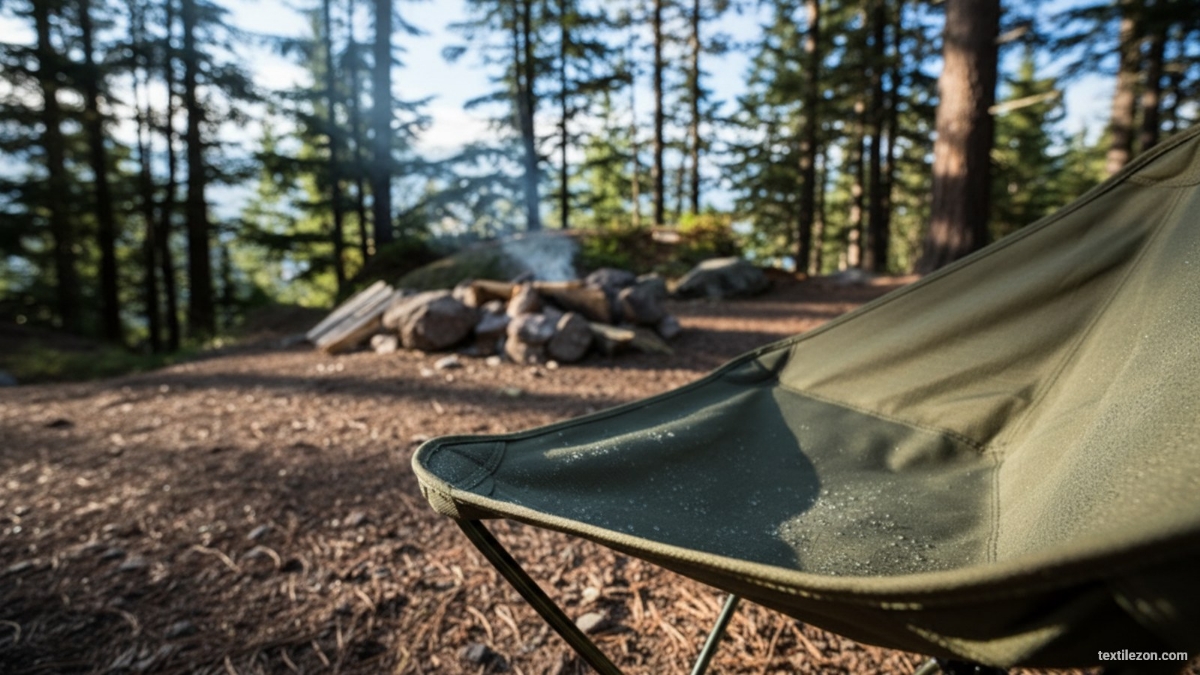
The distinction between weather-resistant and waterproof fabrics is fundamental for procurement decisions. Weather-resistant fabrics repel light moisture through DWR treatments or tight weave constructions. Waterproof materials incorporate continuous membranes or coatings that prevent water penetration entirely, rated by hydrostatic head pressure. Camp furniture upholstery applications typically require weather-resistant specifications, prioritizing breathability and user comfort alongside environmental protection.
Key Performance Properties to Evaluate
Procurement professionals must evaluate several technical properties simultaneously when assessing all-weather fabric suitability. No single metric defines the ideal specification — the best performing fabric balances multiple performance dimensions against cost and application requirements.
Water resistance is typically achieved through durable water repellent (DWR) treatments or tight weave constructions. Standard DWR performance ratings range from 0 to 5, with ratings of 3 or above considered suitable for outdoor furniture. Hydrostatic head pressure ratings, measured in millimeters, indicate how much water pressure a fabric withstands before leaking — a minimum of 1,000mm is generally recommended for camp furniture covers, while 2,000mm or above provides enhanced protection in high-rainfall climates.
UV resistance is measured using the UV Protection Factor (UPF) scale, where a rating of 50+ blocks more than 98% of UV radiation. The Grey Scale for color change, assessed under ISO 105-B02, is the industry standard for colorfastness evaluation. Fabrics rated 4–5 on this scale suit demanding outdoor applications, and many premium manufacturers specify a minimum of 2,000 hours of UV resistance under Xenon arc testing protocols.
Mildew resistance is critical in humid tropical climates and coastal environments where moisture retention accelerates microbial growth. Synthetic fibres such as polyester, polypropylene, and acrylic are inherently less susceptible than natural fibres. Antimicrobial treatments applied during finishing provide an additional protection layer in high-risk deployment environments.
Abrasion resistance is measured using the Martindale or Wyzenbeek testing methods. A minimum of 15,000 Martindale cycles is a common industry benchmark for outdoor furniture upholstery, while commercial-grade applications typically specify 30,000 cycles or above to withstand sustained high-use conditions.
Common Fabric Types for Camp Furniture
The camp furniture market draws from several synthetic and semi-synthetic textile materials. Each fibre type brings distinct performance characteristics, cost profiles, and sustainability considerations that B2B buyers must evaluate against specific application requirements.
Solution-Dyed Acrylic
Solution-dyed acrylic is widely regarded as the premium choice for outdoor furniture fabrics, with an established reputation as an industry standard in marine and outdoor applications. Acrylic offers exceptional UV resistance, color retention, and low moisture absorption — typically below 2% by weight — making it highly resistant to mold and color degradation under sustained outdoor exposure.
Acrylic fabrics are breathable and comfortable in warm conditions, making them well suited for seating applications in camping environments. The primary trade-off is cost: solution-dyed acrylic commands a significant price premium over polyester alternatives at comparable weight specifications, which makes it most appropriate for premium product tiers and long-lifecycle commercial investments.
Solution-Dyed Polyester
Solution-dyed polyester offers a compelling balance of performance and value for camp furniture procurement. Modern high-tenacity polyester yarns deliver excellent tensile strength and abrasion resistance, while solution-dyeing ensures superior UV and wash fastness compared to conventionally dyed grades.
Polyester's low moisture absorption — typically under 0.4% by weight — makes it naturally resistant to mold and mildew in most environments. The fabric also maintains flexibility in cold temperatures. For large-scale commercial procurement, solution-dyed polyester delivers the strongest performance-to-cost ratio across the all-weather fabric category.
Olefin (Polypropylene)
Olefin is the lightest major outdoor fabric fibre, with a specific gravity of approximately 0.91 — the only common textile fibre that floats on water. This low density translates into lightweight camp furniture solutions, a meaningful advantage for portable product lines and backpacker-oriented designs.
Olefin is inherently solution-dyed, as the fibre cannot accept color through conventional post-extrusion processes, resulting in excellent colorfastness under UV exposure. However, olefin has a relatively low melting point of approximately 165°C and can be susceptible to heat damage, which is a practical consideration for campfire-adjacent furniture applications.
High-Density Polyethylene (HDPE)
High-density polyethylene fabrics are frequently specified for shade sail and furniture sling applications. HDPE is typically constructed in open-mesh weave formats that allow air circulation while providing structural support and UV shade. This makes it particularly suited for lounge chairs and hammock slings in high-temperature outdoor environments where airflow and long-term durability are both priorities.
Canvas and Cotton Blends
Traditional waxed canvas and cotton-synthetic blends remain relevant in the premium lifestyle camping segment, where natural aesthetics and heritage appeal influence purchasing decisions. However, natural fibre content significantly increases maintenance requirements — cotton canvas requires regular reproofing treatments and is substantially more susceptible to mold than synthetic alternatives.
For commercial camp furniture procurement, cotton blends are generally not recommended unless the end-use context specifically demands the aesthetic. Cotton-polyester blends offer a compromise between tactile quality and improved mold resistance for applications where appearance takes priority over low-maintenance performance.
Technical Specifications: Denier, GSM, and Coatings
Understanding key fabric technical specifications enables objective comparisons across supplier offerings. Three metrics are particularly important when evaluating all-weather fabrics for camp furniture procurement.
Denier and Yarn Count
Denier measures the linear mass density of a fibre or yarn — expressed as mass in grams per 9,000 meters of length. Higher denier values indicate thicker, heavier individual fibres. Outdoor furniture fabrics typically range from 150D for lightweight accessories to 600D or above for heavy-duty covers and structural load-bearing fabrics.
Higher denier constructions generally provide greater abrasion resistance and structural substance, but denier alone does not determine overall performance. Weave structure, coating type, and fibre quality all contribute to the final fabric's characteristics, so denier must be evaluated in combination with other technical specifications.
GSM (Grams per Square Meter)
GSM is the most widely used measure of fabric weight and serves as a primary indicator of durability and substance in outdoor textile applications. Common GSM ranges for all-weather camp furniture fabrics reflect different application demands:
- 150–200 GSM: Lightweight, suitable for decorative covers and accessories
- 200–350 GSM: Mid-weight, appropriate for seating upholstery and furniture slings
- 350–500 GSM: Heavy-weight, suitable for furniture covers, awnings, and load-bearing applications
- 500+ GSM: Industrial-grade, used in commercial shade structures and heavy-duty protective covers
Coatings and Finishes
Fabric coatings transform base textile substrates into high-performance all-weather materials. Common coating types used in camp furniture applications include:
- PVC coating: Provides complete waterproofing but reduces breathability. Commonly specified for furniture covers and protective tarps.
- PU (Polyurethane) coating: More breathable than PVC while offering strong water resistance. Preferred where condensation management is important.
- Acrylic coating: Enhances UV resistance and color retention. Often applied as a protective topcoat to outdoor upholstery fabrics.
- DWR (Durable Water Repellent): A fluoropolymer-based surface treatment causing water to bead and roll off the fabric surface. Must be periodically renewed as it degrades with use and washing.
- Antimicrobial treatment: Biocide-based treatments that inhibit mold and mildew growth. Particularly valuable in humid or tropical deployment environments.
Climate-Based Selection Guide
The optimal all-weather fabric specification varies significantly based on deployment climate. A fabric suited for a Mediterranean glamping operation may perform poorly in a tropical rainforest camp or an alpine retreat. Aligning specification to climate conditions is a critical step in the procurement decision process.
In hot and sunny climates, UV resistance and colorfastness are the primary selection criteria. Solution-dyed acrylic or solution-dyed polyester with a minimum UPF 50+ rating are recommended. HDPE mesh fabrics also perform well in seating applications that require airflow alongside UV shade and structural support.
In high-humidity and tropical climates, mold resistance and fast-drying properties take priority. Fully synthetic fabrics — olefin or polyester — combined with antimicrobial treatments and open-weave constructions that promote drainage are the preferred specification. Fabrics with significant natural fibre content are generally unsuitable for tropical camp furniture applications.
In cold and alpine climates, temperature flexibility and resistance to freeze-thaw cycling become critical requirements. PVC-coated fabrics can become brittle at low temperatures; PU-coated polyester maintains better flexibility below 0°C. Alpine camp furniture fabrics should carry hydrostatic head ratings of at least 2,000mm to manage heavy snowfall and ice melt conditions effectively.
In coastal and marine environments, salt air accelerates degradation and can compromise certain coatings over time. Marine-grade fabrics with enhanced salt-resistance test results are recommended for coastal camp furniture. Solution-dyed acrylic and HDPE perform particularly well in salt-laden environments, resisting the color degradation and surface deterioration that affects lower-grade materials.
Care and Maintenance Best Practices
Even the highest-performance all-weather fabrics require appropriate maintenance to achieve their rated service life. Establishing clear care protocols is essential for commercial operators managing large inventories of camp furniture across multiple seasons.
- Regular brushing: Remove loose dirt and debris before it embeds in the weave structure. Accumulated organic matter accelerates mold growth, particularly in shaded or damp storage conditions.
- Mild soap cleaning: Use pH-neutral soap solutions for routine cleaning. Avoid harsh detergents or abrasive tools that damage surface coatings and DWR treatments.
- DWR renewal: Reapply DWR treatments when the fabric no longer beads water effectively. Use manufacturer-approved formulations to maintain both performance and warranty coverage.
- Dry storage: Store furniture fabrics completely dry to prevent mold formation. Even mold-resistant fabrics can develop surface staining if stored damp for extended periods.
- Off-season protection: Use opaque covers or indoor storage during non-operational periods to minimize unnecessary UV exposure and extend colorfastness and DWR service life.
Commercial operators should document maintenance schedules for all outdoor furniture fabrics, tracking cleaning frequency, DWR renewal dates, and visual inspection results. This documentation supports warranty claims and helps identify fabrics approaching end-of-life before field failure occurs.
Frequently Asked Questions
What is the difference between water-resistant and waterproof camp furniture fabrics?
Water-resistant fabrics repel light moisture through DWR treatments or tight weave constructions but can saturate under sustained heavy rain. Waterproof fabrics incorporate continuous membrane or coating systems — rated by hydrostatic head pressure — that prevent water penetration under sustained exposure. Most camp furniture upholstery uses water-resistant specifications for breathability, while waterproof materials are reserved for covers and protective tarps.
How does solution dyeing improve all-weather fabric performance?
Solution dyeing introduces color pigments directly into the polymer melt before fibre extrusion, making the pigment integral to the fibre structure rather than surface-applied. This delivers dramatically superior UV resistance and colorfastness compared to piece-dyed or yarn-dyed alternatives. Solution-dyed polyester and acrylic are the preferred specifications for long-life outdoor camp furniture applications.
What denier polyester is appropriate for camp chair slings?
Camp chair slings typically require 300D to 600D polyester with a tight plain or twill weave construction. Lower deniers (150D–200D) suit lightweight backpacker chairs where weight reduction is a priority. Commercial-grade seating applications benefit from 600D or above, tested to a minimum of 30,000 Martindale abrasion cycles for sustained high-use environments.
How often should DWR treatments be reapplied to outdoor furniture fabrics?
DWR treatments require renewal after extended outdoor exposure or when the fabric no longer beads water effectively. Washing with harsh detergents accelerates DWR degradation. Commercial operators should incorporate DWR renewal into annual maintenance schedules using manufacturer-approved products to maintain both water repellency performance and applicable fabric warranty coverage.
Are there sustainable all-weather fabric options for camp furniture?
Recycled polyester (rPET), produced from post-consumer plastic bottles, offers comparable performance to virgin polyester at equivalent specifications while reducing petrochemical consumption. Several leading outdoor fabric manufacturers now offer OEKO-TEX certified and bluesign-approved all-weather fabric ranges. Requesting environmental certifications alongside standard technical datasheets is recommended practice for sustainability-focused procurement teams.
Key Takeaways for B2B Fabric Procurement
Effective all-weather fabric procurement for camp furniture requires a systematic evaluation of performance properties, technical specifications, and climate-specific requirements. The following points summarize the critical decision criteria for procurement professionals:
- Prioritize solution-dyed fibres — acrylic or polyester — for applications with sustained UV exposure to ensure long-term colorfastness and structural integrity.
- Match GSM and denier specifications to the mechanical demands of each specific furniture application type, from seating slings to heavy-duty protective covers.
- Specify hydrostatic head ratings appropriate for the deployment climate: minimum 1,000mm for general outdoor use, 2,000mm or above for high-rainfall and alpine environments.
- Require antimicrobial treatments for fabrics deployed in humid or tropical climates to prevent mold-related degradation and extend service life.
- Evaluate total cost of ownership, not just unit price — premium all-weather fabrics with longer service life frequently deliver lower lifecycle costs for commercial operations.
- Establish documented maintenance protocols to achieve rated fabric service life and support warranty claims in commercial settings.
Thorough specification aligned with end-use requirements consistently delivers better procurement outcomes than price-driven selection alone. Explore more technical articles on the Textilezon platform to support your fabric sourcing and specification decisions across all outdoor textile categories.